viernes, 26 de febrero de 2021

New story in Science and Health from Time: They’re Healthy. They’re Sustainable. So Why Don’t Humans Eat More Bugs? They’re Healthy. They’re Sustainable. So Why Don’t Humans Eat More Bugs?


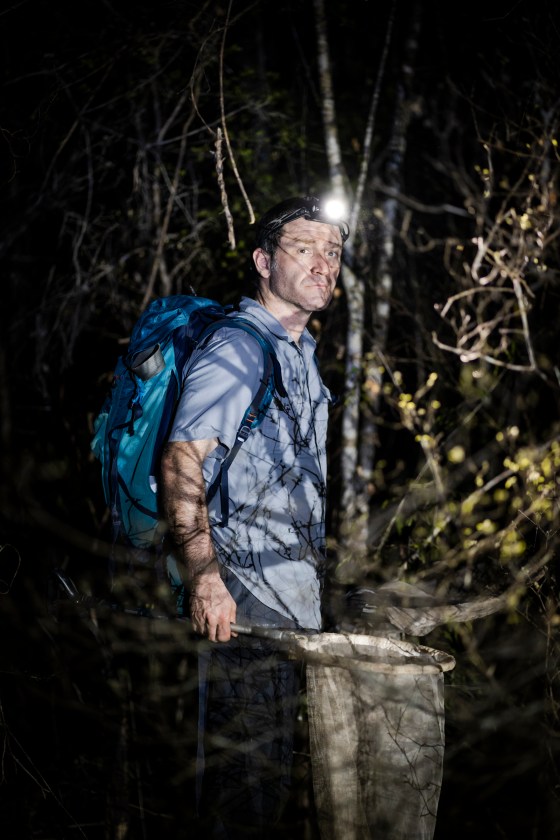
Sylvain Hugel is one of the world’s foremost experts on crickets of the Indian Ocean Islands. So when he received an email from a fellow entomologist in March 2017 asking for help identifying a species in Madagascar that could be farmed for humans to consume, he thought it was a joke. “I’m working to protect those insects, not eat them,” the French academic responded tartly.

But the emails from Brian Fisher, an ant specialist at the California Academy of Sciences, in San Francisco, kept coming. Fisher had been doing fieldwork in Madagascar when he realized that the forests where both he and Hugel conducted much of their research were disappearing. Nearly 80% of Madagascar’s forest coverage has been destroyed since the 1950s, and 1-2% of what remains is cut down each year as farmers clear more trees to make room for livestock. The only way to prevent this, Fisher told Hugel in his emails, was to give locals an alternative source of protein. “If you want to be able to keep studying your insects, we need to increase food security, otherwise there will be no forest left,” Fisher wrote.

His proposal was insect protein. More than two-thirds of Madagascar’s population already eat insects in some form, usually as a seasonal snack. If there were a way to turn that occasional snack into a regular meal by making it easily available, it could help ease pressure on the island’s threatened forests. Crickets, which are high in protein and other vital nutrients, were already being farmed successfully in Canada for both human and animal consumption. Surely Hugel, with his vast knowledge of Indian Ocean crickets, could help identify a local species that would be easy to farm, and, more importantly, might taste good?

For Hugel, his scientific curiosity competed with squeamishness. He knew that crickets were healthy, and that they were high in protein, iron and vitamin B-12. But the psychological barriers were equally high. He started with a roasted, salted cricket. It took three attempts before he could relax enough to actually taste, chew and swallow the cricket. To his surprise, it was good. Really good. Three years later, he laughs at the memory of his first foray into entomophagy. “It changed my life,” he says via video chat from his home in France.

Insects are now a regular part of his daily meals. He spoons cricket powder over his morning yogurt, sprinkles larvae over his salads like bacon bits, and fries up frozen crickets for supper. It also changed the direction of his academic research. While he is still discovering new cricket species, he now regularly publishes papers on the nutritional value of edible insects and findings about best farming practices.

Meanwhile, the cricket farm he helped Fisher launch is up and running in Madagascar’s capital Antananarivo, producing several pounds of ground cricket meal a day. The protein-packed, fiber-rich powder is now being used by international aid agency Catholic Relief Services for country-wide famine relief projects, as well as in school lunch programs and tuberculosis treatment centers where patients often struggle to get adequate nutrition.
Madagascar cricket farm
Andy IsaacsonSylvain Hugel, a cricket specialist, collects specimens in the Menabe Antimena dry forest area in Madagascar on Nov. 22, 2019.

In June, Valala Farms, named after the local word for cricket, will expand onto an even bigger campus, with 25,000 square feet dedicated to cricket cultivation (enough to produce 31,000 pounds of powder each year, or about 551,000 meals), as well as an educational program to train future cricket farmers. The attached research center is tasked with identifying which of Madagascar’s 100 or so edible bugs have the right combination of taste, healthiness and farmability. “For me entomophagy is the very solution for Madagascar,” says Hugel. “There is no way to save the forests without taking care of the people who live near them, and that means giving them food security.”

A six-legged solution to world hunger

In seeking to protect Madagascar’s forests, Fisher and Hugel may have found a solution to one of the world’s most pressing problems. The United Nation’s Food and Agriculture Organization [FAO] says that agricultural production worldwide will have to increase by 70% in order to feed a global population expected to reach 9.1 billion by 2050. Yet agriculture is one of the biggest drivers of natural destruction, threatening 86% of the 28,000 species most at risk of extinction, according to a new report by the UK-based policy institute Chatham House and the UN environment program.

Demand for animal protein in particular is increasing the strain on the environment: 80% of the world’s farmland is used to raise and feed livestock, even though animals only account for 18% of global calorie consumption. Decreasing meat production, says the report, would remove pressure to expand livestock operations while freeing up existing land to restore native ecosystems and increase biodiversity.

There is a sustainable alternative to going meat-free, the FAO says: edible insects. Grasshoppers, crickets and mealworms are rich in protein, and contain significantly higher sources of minerals such as iron, zinc, copper, and magnesium than beef. Yet pound for pound they require less land, water and feed than traditional livestock. Insect farming and processing produces significantly lower greenhouse gas emissions. Not only do insects produce less waste, their excrement, called frass, is an excellent fertilizer and soil amender. Agnes Kalibata, the UN Secretary-General António Guterres’ special envoy for the 2021 Food Systems Summit, says that farming insects could provide an elegant solution to the intertwined crises of climate change, biodiversity loss, hunger and malnutrition. “Insects are 60% dry weight protein. I mean, honestly, why wouldn’t we use them?” she says. “But we have to be able to put them in a form that is acceptable to different cultures and different societies.”

Just as in Madagascar, there are technical and cultural barriers to overcome before bugs compete with beef (or any other meat) for space on the global dinner plate. While two billion people, mostly in Africa, Latin America and Asia, already eat insects, in Europe and North America bugs are more likely to be associated with filth, not food. But attitudes are starting to change. Canada’s nationwide grocery chain Loblaws has been stocking locally produced cricket powder since 2018, and in January the European Union food safety agency declared yellow mealworms safe for human consumption, allowing producers to sell insect-based foods throughout the continent. Analysts at Barclays Bank now estimate that the insect protein market could reach $8bn by 2030, up from less than $1bn today. Still, that’s a fraction of beef’s $324 billion.

Madagascar cricket farm
Andy Isaacson Lemurs in Kirindy Forest, a private reserve along Madagascar’s west coast that has suffered profound deforestation in recent years, on Nov. 23, 2019.

In order to compete, manufacturers will have to figure out how to successfully market bugs to consumers. The sustainability halo and health aspects may be enough for some, but are unlikely to work on a wider scale, says Cortni Borgerson, an anthropology professor at Montclair State University in New Jersey. “You can’t just say, ‘this source of protein you’ve been eating all your life? Well you can’t have that anymore. Here’s another source, and it’s got six legs instead of four.’ That will never work.” The goal, she says by video chat from New Jersey, should be “to find something that people would rather be eating, or would like just as much.” In other words, insects have to taste at least as good as what they are meant to replace.

In the taste stakes, crickets still come up short. Fried and dusted with chili lime or nacho spice, they don’t taste much different from say, corn nuts or extra crispy shrimp. In powder form, it has a mild, nutty flavor and is best used like a protein boost, sprinkled over porridge, stirred into a vegetarian chili or folded into banana bread batter. Devotees say they can’t get enough, but even they admit that crickets may have a hard getting past that most damning of descriptions—a meat alternative. Madagascar, however, has a better contender: the bacon bug.

A bug fit for a taco

Thirteen years ago, while working on her PHD dissertation in Madagascar’s Masoala Peninsula, Borgerson encountered a problem. Locals in the UNESCO World Heritage Site were eating lemurs and other endangered animals to add protein to their otherwise spare diets. In search of sustainable substitutions, she canvassed residents about other meats they liked to eat. Chicken and pork often came up, but so did an unfamiliar item: sakondry. When Borgerson asked what it was, a few of the locals came back with a plate piled high with plump fried bugs. As a Midwesterner with a rather tame palate, to Borgerson the idea of eating them was appalling. But her prohibition against refusing a meal soon kicked in, she recalls. To her surprise, they were delicious, with a taste and consistency not unlike cubes of pork belly she would fry up back home—“crunchy on the outside, with that fatty meatiness of bacon in the middle.” Even her kids like it, she says, “which is saying a lot for American children.”

The villagers loved sakondry, but the bug wasn’t always easy to find. The solution to stopping lemur hunting, Borgerson realized, was not “four legs bad, six legs good,” but rather, how to make something the villagers already wanted to eat easier to get. Sakondry had never been studied, so Borgerson started working with entomologists like Fisher and local conservation groups to figure out the insect’s life cycle and feeding habits. Once they discovered the ideal host plant, a kind of native bean, the villagers started planting it among their crops and along local pathways. With a ready supply of tasty protein growing just beyond the front door, villagers had less reason to go to the forest to hunt. Two years on, says Borgerson, who plans to publish a paper on her findings, lemur poaching in the area has gone down by 30-50%.

Farming insects is not the only solution for Madagascar’s threatened forests, says Tiana Andriamanana, Executive Director of the Malagasy conservation organization Fanamby. Education and stronger environmental protection laws are equally important. But it’s a start. “We need to consider alternatives. The number of people in Madagascar, in the world, is growing. We can’t continue to eat meat at this rate, but we don’t all want to be vegan either.”

Sakondry’s taste profile seems tailor-made for the American palate; Borgerson recommends it as a filling for in tacos. Yet she is not suggesting that midwestern ranchers switch from bulls to bugs anytime soon. Instead she is pointing to what will reduce overall meat consumption globally: not prohibition, not guilt, but finding alternatives that are equally delicious. “You want to make it easier for individuals to make the choices that they would rather be making,” she says. In Masoala, that was sakondry. Other communities and regions have different preferences and, especially in drought-stricken areas, needs. That’s where Fisher, the ant-specialist-turned-cricket-farmer comes in.

Madagascar cricket farm
Andy IsaacsonA staff worker harvesting mature adult crickets at Valala Farms in Antananarivo, Madagascar on Nov. 20, 2019.

Though he set out to save forests, Fisher’s cricket powder is doing more to alleviate famine and improve nutrition in Madagascar. His production facility is in the country’s urban center, far from the forested regions where locals struggle to find alternatives to hunting and clear cutting grazing grounds. To really have an impact, he says, farmed insects not only have to be as good as meat, they also have to be easy to grow, and hyper-local. At the Valala Farms research center, scientists, biodiversity specialists and entomologists are working together to identify the most promising edible insects for each climatic region, and figuring out how to farm them at scale. His goal, he says, is to develop an “insect toolkit” that can be adapted to local needs, whether it’s protein powder to address malnutrition, a meat alternative, grubs for a chicken farm, or something that can turn brewery waste into an additive for depleted soils. “We are trying to take advantage of 300 million years of insect evolution,” he says. “We want that whole spectrum in our toolkit so that we can go and offer solutions wherever we go, in Madagascar and across Africa—wherever you have poverty combined with malnutrition and biodiversity issues.”

And why stop in Africa — or Earth, for that matter? People are so quick to imagine themselves going to other planets if things get really bad here on Earth, he says. “But what would you eat on Mars? You would have to design systems to produce protein, and insects are the most efficient.” He pauses his rapid-fire delivery to make a mental note: “I should write a proposal to NASA to do research on what insect would be the most efficient for converting protein in space travel.”

The hatching of a trend

It may be a while yet before sakondry are sent to space. In the meantime, entomophagy advocates say a cultural shift is already in the works, particularly among the young and adventurous urbanites who will be setting food trends for generations to come. “It’s not going to happen overnight, and it’s never going to 100% replace meat, but those of us who are health conscious and environmentally aware have already started making that transition,” says biologist Jenna Jadin, who wrote Cicada-licious, a cookbook featuring cicada dumplings and other treats, just in time for the 2004 hatching of Washington D.C.’s 17-year cicada cycle (the next hatching is this summer. Get your skillets ready).

The cookbook was semi-satirical, penned in part to demystify the phenomenon. At the time the idea of eating bugs was outrageous. These days, her local organic grocery store has a whole aisle dedicated to insect products: chocolate-covered mealworms, cricket pasta, peanut butter-cricket balls and a line of cricket chips called Chirps. And one of America’s most famous chefs, José Andrés, has been serving chapulines, sauteed grasshoppers, at his Mexican restaurant Oyamel since 2004.

Food culture does change. Five hundred years ago, Italians thought tomatoes were poisonous. In the 1800s, Americans considered lobsters to be trash food and fed them to prisoners. Few cultures ate raw fish 50 years ago; now sushi is ubiquitous. Insects are likely to follow the same trajectory, says Fisher, who suggests salt-roasted crickets served with beer as the ideal “gateway bug.” The sustainability factor, the health aspects, those are the angles that will make people want to try edible insects, he says. The rest is easy. “If it’s done right, they will keep coming back for more, because it tastes really good.”


New story in Science and Health from Time: ‘If This Task Was Urgent Before, It’s Crucial Now.’ U.N. Says World Has 10 Months to Get Serious on Climate Goals ‘If This Task Was Urgent Before, It’s Crucial Now.’ U.N. Says World Has 10 Months to Get Serious on Climate Goals


The language of diplomacy rarely allows for a true sense of emotion or urgency. But reading between the lines of the latest report commissioned by the United Nations Framework Convention on Climate Change (UNFCCC)—the body representing the 197 member nations of the Paris Agreement to minimize a global average temperature rise this century—the message is clear. The world has precisely ten months to get our act together if there is to be any hope of staving off a climate catastrophe by the end of the century.

If member nations are to achieve the Paris Agreement target of limiting global temperature rise above preindustrial levels by 2°C—ideally 1.5°C—by 2100, they must redouble efforts and submit stronger, more ambitious goals to reduce carbon emissions, according to the report. The document tabulates the national climate action plans [NDCs], of each member nation. The NDCs, which were due at the end of 2020, are essentially blueprints laying out emission reduction targets for each country along with plans detailing how they will meet those stated goals.

Read more: At Its Five-Year Anniversary, the Paris Deal Remains the Most Influential Global Framework for Addressing Climate Change

So far, the plans all coming up short. The report shows that while the majority of the 75 nations that have submitted NDCs increased their individual commitments, their combined impact puts them on a path to achieve only a 1% reduction in global emissions by 2030, compared to the 45% reduction needed to hit the 1.5°C temperature goal. “This report shows that current levels of climate ambition are very far from putting us on a pathway that will meet our Paris Agreement goals,” said Patricia Espinosa, Executive Secretary of UN Climate Change. “While we acknowledge the recent political shift in momentum towards stronger climate action throughout the world, decisions to accelerate and broaden climate action everywhere must be taken now.”

Another report will be released prior to COP 26, the global meeting on Climate Change, currently scheduled for November in the U.K., giving stragglers time to catch up, says Espinosa. “It’s time for all remaining parties to step up, fulfill what they promised to do under the Paris Agreement and submit their NDCs as soon as possible. If this task was urgent before, it’s crucial now.”

Read more: 2020 Was a Year of Climate Extremes. What Can We Expect in 2021?

The former President of Ireland, Mary Robinson, who also served as United Nations High Commissioner for Human Rights and is now Chair of The Elders, was scathing in her assessment of the commitments made by some of the world’s biggest polluters and did not hesitate to single out countries by name. “Major economies need to ramp up their ambition – starting with the U.S., where expectations are high for an emissions and finance pledge to make up for lost time. Others like Japan, Canada, Korea, New Zealand and China, have committed to net zero goals by mid-century, but we are still missing their promised new near-term plans to get there,” she said in a statement released ahead of the report.

Robinson was particularly withering when it came to Australia’s commitments, noting that it was not enough for the country to “repackage a plan that was already inadequate five years ago. The good news is there is still time for radical improvement if Australia wants to keep pace with their major allies and trading partners.”

The clock is ticking for Australia, as well as everyone else.

miércoles, 24 de febrero de 2021

New story in Science and Health from Time: NASA Hid an Inspiring Message on the Parachute of the Mars Rover Perseverance NASA Hid an Inspiring Message on the Parachute of the Mars Rover Perseverance


NASA’s Perseverance rover is the gift that keeps on giving.

In the wake of the rover’s awe-inspiring touchdown on Mars on Feb 18, an event that brought over 20 million people together to watch NASA’s livestream of the successful landing, there was even more to the incredible spectacle than met the eye. An intrepid computer science student and his father cracked a coded secret message hidden within the pattern of the rover’s parachute it used to descend onto the Marian surface.

Allen Chen, the engineer in charge of the landing system, hinted during a Monday news conference that video footage of Perseverance’s parachute deploying contained a hidden missive. So the 23-year-old student, Maxence Abela, and his Google software engineer father, Jerome Abela, set to work solving the puzzle.

By breaking down the parachute’s pattern into 10-digit sequences of binary code, the Abelas deduced that the numerical sequences within the parachute’s inner three rings, when assigned to English alphabet letters, read “DARE MIGHTY THINGS.” Maxence posted the father-son team answer, along with an explanation, on Twitter around two hours after Chen made his original statement.

“We like those kinds of little challenges,” Maxence told the New York Times. “We didn’t think we would be able to solve it, but we would at least try.”

The fourth ring, as Adam Steltzner, the chief engineer for Perseverance, later shared, works out to be the longitude and latitude of NASA’s Jet Propulsion Laboratory in California: 34°11’58” N 118°10’31” W.

The parachute’s Easter egg hidden message is one that seems to epitomize NASA’s overall goal for the Perseverance mission.

“The Mars 2020 Perseverance mission embodies our nation’s spirit of persevering even in the most challenging of situations, inspiring, and advancing science and exploration,” acting NASA Administrator Steve Jurczyk said in a statement. “The mission itself personifies the human ideal of persevering toward the future and will help us prepare for human exploration of the Red Planet.”

lunes, 22 de febrero de 2021

New story in Science and Health from Time: Watch the Perseverance Rover Land on Mars in This Newly Released NASA Video Watch the Perseverance Rover Land on Mars in This Newly Released NASA Video


When the Perseverance rover touched down on Mars on Feb. 18, NASA controllers had only the data-stream coming back from the spacecraft to confirm that the hair-raising descent was going as planned. It was only when they got the “weight on wheels” signal—the confirmation that the rover was on the ground and supporting itself—that they knew the landing was a success.

Now, just four days later, NASA has released footage of the landing captured by multiple cameras on both the spacecraft itself and the “sky crane” descent stage that lowered the rover the last 21 meters (70 ft.) to the ground. A spectacular landing now seems all the more so.

domingo, 21 de febrero de 2021

New story in Science and Health from Time: The Mars Rover and the Science of Awe The Mars Rover and the Science of Awe


</span><strong><span class="s1">Though we travel the world over to find the beautiful, we must carry it with us or we find it not. </span></strong><span style="font-weight: 400;">ide class="right-rail__container right-rail__container--ad">


Well hello! I’m so glad you’re here. If you’re having trouble viewing this in email, see the TIME.com version here.

—Ralph Waldo Emerson

Perseverance, Awe, and Why We Need Wonder

Here’s a secret: I am a recovering cynic with recurring pessimistic tendencies. It’s hereditary. On a sunny day, my Irish grandfather would look out the window and say: “We’ll pay for this.” And I won’t even get into the generations of head-spinning drama on the Russian side.

Lately, for all the obvious reasons, it’s been way too easy to fall into compulsive fretting.

But last Thursday, I turned on the news expecting the usual terribleness, and there was the new Mars Rover, a car-sized cosmic miracle of engineering and optimism. And just seeing it, I felt a shocking little flutter of awe and untrammeled joy.

Researchers who study awe (and yes, they do, more on that below) describe it as an emotion that arises when “one encounters something so strikingly vast that it provokes a need to update one’s mental schemas.”

And my mental schemas definitely need updating. I could barely process this display of national functionality. The more I learned, the more awe I felt. I mean, hold on, while we were going about our lives over the last ten years, a legion of brilliant NASA scientists created an unbelievably sophisticated research vehicle, basically, a robotic geologist and astrobiologist designed to search for evidence of past life on Mars.

Those engineers started work on this Mars Rover three presidents, two economic collapses, many million-person marches, four annoying new social media platforms, and at least 2,000 streaming services ago. Then, last summer, while we were all overwhelmed with multiple crises, NASA took this magic vehicle, named it Perseverance, put it on a rocket, and sent it nearly 300 million miles across the galaxy to Mars. And after six-and-a-half months, Perseverance arrived at the edge of the thin Martian atmosphere traveling at 12,100 miles per hour.

And on February 18th, we turned our weary, jaded eyes to the sky, or rather, to a NASA live stream to witness the impossible, all-or-nothing choreography of a Mars Rover landing.

<strong>An infinite number of things could have gone wrong out there, but they didn’t. Somehow, this human-made machine defied the odds and the entropy that shapes the universe.</strong>It’s all the more wondrous when you think about the fact that mission control at NASA’s Jet Propulsion Laboratory in Southern California wasn’t controlling Perseverance live during the descent. Communications from Earth to Mars take about 12 minutes. So they just had to have confidence they’d prepared Perseverance for any eventuality and that it could navigate to a precise spot on an ancient Martian lake bed. To do this, Perseverance had to open a parachute at supersonic speed, deploy rockets to guide the descent, and withstand temperatures north of 2,000 degrees Fahrenheit.

That feat, the overcoming of incomprehensible distances and even greater odds, is what creates feelings of awe. It’s an emotion that alters our understanding of the world and changes our perspective, whether it’s inspired by contemplating the multiverse, natural phenomenon, or even something scary, like a massive show of power by other humans. And now, when we’re feeling stuck in so many ways, any awe you can find while not leaving your house is a good thing.

Better yet, awe often puts “people in a self-transcendent state where they focus less on themselves and feel more like a part of a larger whole,” according to a white paper prepared by the Greater Good Science Center at the University of California, Berkeley. And that sense of connectedness and humility stokes empathy and generosity, which benefits the species and inspires individual happiness.

You don’t have to wait for a Mars Rover for a hit of awe. The deeper you dig, the more closely you observe the world and learn about almost anything in nature or culture, the more awe you find. It’s like looking at a butterfly’s wings through a microscope. Or just becoming more intentionally aware.

A.J. Jacobs, the guy who spent a year living biblically and wrote about it, also wrote a book called Thanks a Thousand. And in that book, Jacobs tracks down and thanks every person who had anything to do with his morning cup of coffee, from the farmers to the designer of the cup lids, as well as truckers, mechanics, biologists, smugglers, and goatherds. He reports that the experience, this awareness of the hundreds of people we’re connected to without realizing it, and the ensuing gratitude he felt transformed his life.

As for me, I’m going to dig for some awe around here, in New York. I am entranced by the snowy owl that turned up in New York’s Central Park a few weeks ago. (Did you know that their feathers don’t have much pigment because it makes more space for air, which acts as insulation that helps them stay warm?)

And heck, why not share this quote from The Once and Future King by T.H. White.

“You may grow old and trembling in your anatomies, you may lie awake at night listening to the disorder of your veins, you may miss your only love, you may see the world about you devastated by evil lunatics, or know your honour trampled in the sewers of baser minds. There is only one thing for it then — to learn. Learn why the world wags and what wags it. That is the only thing which the mind can never exhaust, never alienate, never be tortured by, never fear or distrust, and never dream of regretting. Learning is the only thing for you. Look what a lot of things there are to learn.” 💌

Read more about what Perseverance will be doing in its years on the red planet from TIME.


If you’re new to It’s Not Just You, SUBSCRIBE HERE to get a weekly dose delivered to your inbox for free. Send comments and suggestions to me at Susanna@time.com.


COPING KIT ⛱

What You Gain When You Give Things Up Arthur C. Brooks of the Atlantic on Lent and why he believes voluntarily sacrificing pleasurable things resets your senses and makes you master of yourself.

Fighting with a Family Member About Politics? Try These 4 Steps TIME’s Belinda Luscombe on how families can bridge bitter ideological divides with guidance from organizations like Braver Angels, which uses family and marital therapeutic communication techniques to help folks start talking again.

The Sounds of Somewhere Else The New York Times looked at relaxing ambiance videos that will transport you via soundscapes and animated images to relaxing spots like a cafe on a rainy day, a campfire by a lake, or even fictional places like the Twin Peaks Double R Diner. My favorite is this simple audio of 3 hours in a Paris cafe.

How to Help and Get Help in Texas in the wake of power outages and food shortages. Feeding Texas, Mutual Aid Houston, Austin Mutual Aid, Feed the People Dallas, and Para Mi Gente in San Antonio are all welcoming donations. Find a list of organizations helping folks in the Dallas area here, and donate to The Rio Grande Valley winter storm assistance campaign here. And there are more resources at The Texas Tribune.


EVIDENCE OF HUMAN KINDNESS ❤️

Here’s your weekly reminder that creating a community of generosity elevates us all.

Snowflakes swirl down gently in the deep blue haze beyond the window. The outside world is a dream.

Since March of 2020, Pandemic of Love Texas has assisted more than 14,000 families struggling with basic needs like food and shelter. So when a catastrophic winter storm hit the Lone Star state this week, leaving millions without power, safe drinking water, or heat, POL volunteers from every state chapter mobilized in response.

Of course, we were also facing our own challenges individually, but having resources and a community in place is a privilege.</strong>“Having an existing, on-the-ground infrastructure in place definitely helped us mobilize help quickly,” says Kristin Williamson, a Pandemic of Love Dallas volunteer since July.

POL volunteers reached out to families in the Texas network to check on their mental state and respond to their most urgent needs. Here are some of their stories. (Visit Pandemic of Love to find out how you can help.)

Joshua is a single father of two young boys in the Dallas area whose wife passed away a few months ago due to COVID-19. Recently, Pandemic of Love was able to crowd-fund support to get his boys winter clothes and boots and provide him with rent relief so he could avoid eviction. Because of the storm, a bathroom pipe burst in his apartment, causing massive flooding. Joshua and his family had to resort to sleeping in their car.

Aniah is a single mom of four children in Houston who tapped into POL’s mutual aid network in August to catch up with bills after she was furloughed and waiting for unemployment to kick in. The pipes in her home burst on Wednesday, causing flooding. And when her ceiling and roof insulation caved in, Aniah’s food supply froze over, and she didn’t have enough to feed her family.

Esther, who lives just outside Houston, is a single mother of a newborn barely a week old. Things had been tough even before the storm hit. After a high-risk pregnancy and reduced hours at the supermarket where she works, Esther relied on mutual aid for baby supplies. And now, she’s struggled to keep her baby warm and fed without power and running water.

Lacretia is a single mom of three living right outside Texas. In October, she requested help from Pandemic of Love to buy warm clothes and holiday gifts for her kids after losing her job. And as of this writing, the family hasn’t had a shower for four days.

In the wake of this week’s crisis, Joshua, Aniah, Lacretia, and Esther – along with hundreds of other Texans – received a call or text from a Pandemic of Love volunteer and an immediate boost in the form of a cash transfer to help with gas, a hotel night and food. Each family got a microgrant of at least $250.

This story is courtesy of Shelly Tygielski, founder of Pandemic of Love, a grassroots organization that matches those who want to become donors or volunteers directly with those who’ve asked for help with essential needs.


COMFORT CREATURES 🐕

Our weekly acknowledgment of the animals that help us make it through the storm.

Meet WALDO (left) and BESSIE submitted by RACHEL who writes that she fostered these ridiculously adorable puppies through The Labelle Foundation in Los Angeles.

SHARE this edition of It’s Not Just You on social here.

🌺 Did someone forward you this newsletter? SUBSCRIBE to It’s Not Just You here.

viernes, 19 de febrero de 2021

New story in Science and Health from Time: Lawyers Are Working to Put ‘Ecocide’ on a Par with War Crimes. Could an International Law Hold Major Polluters to Account? Lawyers Are Working to Put ‘Ecocide’ on a Par with War Crimes. Could an International Law Hold Major Polluters to Account?


When a Nigerian judge ruled in 2005 that Shell’s practice of gas flaring in the Niger Delta was a violation of citizens’ constitutional rights to life and dignity, Nnummo Bassey, a local environmental activist, was thrilled.

Bassey’s organization, Friends of the Earth, had helped communities in the Niger Delta sue Shell for gas flaring, a highly polluting practice that caused mass disruption to communities in the region, polluting water and crops. Researchers had found that those disruptions were associated with increased rates of cancer, blood disorders, skin diseases, acid rain, and birth defects—leading to a life expectancy of 41 in the region, 13 years fewer than the national average.

“For the first time, a court of competence has boldly declared that Shell, Chevron and the other oil corporations have been engaged in illegal activities here for decades,” Bassey said on Nov. 14, 2005, the day the Federal High Court of Nigeria announced the ruling. “We expect this judgement to be respected and that for once the oil corporations will accept the truth and bring their sinful flaring activities to a halt.”

Yet the judgement was not respected. A United Nations report published six years later found that Shell had not followed its own procedures regarding the maintenance of oilfield infrastructure. Today, Shell is still gas flaring in the Niger Delta.

In the 15 years since the ruling, Bassey has come to believe that Shell’s executives might have been held accountable had the case gone to the International Criminal Court (ICC). “Shell could ignore [the case] because it wasn’t in the international media but if it had gone to the ICC, it would have gotten global attention and shareholders would have known what the company was doing,” he says. “If we had had an ecocide law, things would have turned out differently.”

The word “ecocide” is an umbrella term for all forms of environmental destruction from deforestation to greenhouse gas emissions. Since the 1970s, environmental advocates have championed the idea of creating an international ecocide law that would be adjudicated in the ICC and would penalize individuals responsible for environmental destruction. But the effort has gained significant traction over the past year, with leaders from Vanuatu, the Maldives, France, Belgium, the Netherlands—as well as influential global figures like Pope Francis and Greta Thunberg—expressing their support. Although there are questions about whether the ICC as an institution has the teeth to prosecute any crimes, Bassey and other activists believe the law will act as a powerful deterrent against future forms of environmental destruction. “We will not get different outcomes in cases of exploitation and marginalisation unless we reimagine the laws that govern us,” Bassey says.

In December 2020, lawyers from around the world gathered to begin drafting a legal definition of ecocide. If they succeed, it would potentially situate environmental destruction in the same legal category as war crimes, genocide and crimes against humanity. But even within the movement, questions remain on how far the law should go — and who might fall under its jurisdiction.

The history of the ecocide movement

The term ecocide first rose to the public consciousness in 1972, when Olof Palme, the premier of Sweden, used the term at a United Nations environmental conference in Stockholm to describe the environmental damage caused by the Vietnam War. At the conference, an ecocide convention was proposed but never came to pass.

The idea resurfaced again in the 1990s when the ICC, the world’s first permanent international criminal court, was being created. As a court of last resort, the ICC was established not to override national courts but to complement them, creating a global tribunal that would adjudicate the gravest crimes of concern to the international community. When lawyers came together in 1998 to draft the Rome Statute, the founding document of the ICC, there was a law in the pipeline that would have criminalized environmental destruction.

But the law never came about. “My recollection is that there was just no political support for it,” says Philippe Sands, who was involved in drafting the preamble of the Rome Statute in 1998 (and who would go on to co-chair the expert panel formed in 2020 to draft a legal definition of ecocide). Environmental destruction, Sands says, was not on the public’s consciousness.

This began to change in 2017 when Polly Higgins, a British barrister, launched the Stop Ecocide campaign alongside environmental activist Jojo Mehta. Higgins, who sold her home in 2010 to raise funds to combat environmental destruction, wrote an influential book, Eradicating Ecocide, that informed the legal debate. When the campaign launched a few years later, it quickly gained unprecedented momentum: Greta Thunberg donated €100,000 of the money she received from that year’s Gulbenkian Prize for Humanity to the cause, and for the first time in history, several world leaders publicly backed the idea. Fast-forward three years and now, an expert panel of international criminal lawyers is drafting a definition of ecocide. “Six months ago, we never would have believed where we are at now,” says Mehta. Higgins, sadly, never lived to see her campaign bear fruit, dying in 2019 at the age of 50.

Environmental advocates believe an ecocide law at the ICC would be groundbreaking. While some countries have national laws on environmental harm, there is no international criminal law that explicitly imposes penalties on individuals responsible for environmental destruction. If adopted, experts say there are three main areas where an ecocide law would make a difference.

The first is the symbolic impact of having the ICC elevate environmental destruction to the same level as genocidal crimes. Mehta argues that the fear of being labelled an ecocide criminal could create incentives for leaders to behave more responsibly. “A CEO doesn’t want to be seen in the same bracket as a genocidal maniac,” she says.

The second area where this law could make a difference is by setting a legal precedent, creating a bandwagon effect where international law could prompt changes in national criminal laws, as countries look to signal their environmental commitment to others. ICC laws have influenced national policies before: several countries, including Germany and the Netherlands, have adopted national laws that criminalize ICC crimes.

The third way an ecocide law could be useful is by prosecuting environmental crimes that fall outside of national jurisdictions. This is especially helpful in poorer countries where legal barriers make it difficult to hold foreign companies accountable. An ecocide law, Bassey says, would create an arena in which marginalized communities in countries like Nigeria have a voice against powerful, polluting actors. “Most of this ecocide devastation is happening in communities where voices are not heard,” he says.

NIGERIA-OIL-ENVIRONMENT-CRIME
Pius Utomi Ekpei—AFP via Getty ImagesA picture taken on March 22, 2013 shows gas flare at Shell Cawtharine Channel, Nembe Creek in the Niger Delta

Advocates of an ecocide law also believe it would change the way the environment is valued. “There is something powerfully urgent about the idea that nature has rights,” says Mitch Anderson, founder and executive director of Amazon Frontlines, an organization that works with Indigenous communities in the Western Amazon to protect their lands. “The [ecocide] law would ensure that nature has a legal voice.”

There’s still a long way to go, though. While lawyers are expected to finish a draft of the law by the end of spring, it will take at least 3 to 5 years before the law might be ratified. Drafting the law is just the first of many steps: a member state needs to propose it to the ICC, at which point, 50% of ICC states have to approve it. States will then need to convene to debate the exact definition of the law before eventually, adopting and ratifying it.

But if passed, an ecocide law would be unique in the ICC’s history, not only because of what it would protect but who it could go after—the heads of countries and corporations that are big polluters. Historically, the ICC has been criticized for targeting only African dictators while turning a blind eye to Western leaders responsible for mass atrocities. But with an ecocide law, powerful white men—who are often disproportionately represented in extractive industries—could face criminal charges. “The ecocide movement is powerful not only in the legal precedent it could set for protecting rivers, forests, oceans and the air but also in the names and faces it identifies as being behind this destruction,” says Anderson. “[They] may not look like the picture we’re used to seeing.”

Oil and gas companies contacted by TIME did not want to comment on whether they support an ecocide law, but the International Association of Oil and Gas Producers (IOGP) said in a statement they “want to further improve the environmental performance and reduce the likelihood and consequences of incident.”

What counts as ecocide?

Bassey is confident that many of the world’s worst environmental offenses —such as Chevron’s pollution of the Ecuadorian Amazon in the 1990s or the ongoing coal-seam fires in Witbank, South Africa—could have been prevented had an ecocide law been in place. “If we had an ecocide law, no one would allow this to go on,” he says. In theory, that might be true. But in practice, much depends on how the term is defined.

Sands, the co-chair of the panel drafting the law, is concerned that the bar for what counts as “ecocide” could be set too high. There’s historical precedence for such a scenario: When the idea of “genocide” was first proposed in 1944 by Raphael Lemkin, a Polish lawyer, he envisioned a law that would prosecute individuals that killed members of a national, ethnic, racial, religious or political group. But when member states—many of whom who were worried about their own histories of discrimination—came together to actually draft the law in 1948, they decided that lawyers needed to prove not only that an individual killed members of a group but that they did so with the specific intention to kill.

The result is that most genocide trials heard by the ICC have not ended with a guilty verdict because the burden of proof is too high. Sands is worried the same mistake might be made with the definition of ecocide. “It will never be possible to prove that someone intended to destroy the environment on a massive scale,” he says. “If we set the bar too high, we won’t catch anyone.”

On the other hand, if the bar is set too low—if the ecocide law encompasses too many types of alleged environmentally destructive acts, and implicates too many types of people and institutions—it may lose political support. Many people might get behind an ecocide law that charges mega-corporations for polluting on a grand scale; it is less likely they would support a law that penalizes anyone who destroys the environment in any way. The lawyers drafting the definition didn’t want to offer their opinion on what, specifically, a “low bar” would look like out of concern that doing so would put at risk their ability to advocate for a more robust law.

But even if a robust ecocide law is put in place, the movement faces another big challenge: the limited legal powers of the ICC. On its own, the ICC does not have the authority to enforce laws; it is completely reliant on its member states to arrest and surrender the accused. If a country does not comply—if it does not arrest the accused individual—there is no trial. In addition, over 70 countries are not members—including the United States. Some of the biggest fossil fuel corporations, such as Exxon Mobil and Chevron, are American owned, meaning they would be unlikely to be drawn into a prosecution.

Lawyers working on the ecocide law are acutely aware of these limitations. “Let’s not be starry eyed about our legal international frameworks at the international level,” Sands says. “Let’s be realistic.” Holding perpetrators of environmental destruction to account, he says, must ultimately be done at the national level. Nevertheless, international criminal law can be a tool that catalyzes thinking and helps set a precedent. Although only four people have been convicted at the ICC since it began hearing cases in 2002, the creation of ICC law has influenced national policy through the norms and precedents it helped to generate. Advocates of ecocide believe the law could do something similar.

“We know one law won’t change everything,” says Mehta. “But without something like this in place, it’s hard to see how these [environmental] targets will be met.”


jueves, 18 de febrero de 2021

New story in Science and Health from Time: What Perseverance, NASA’s New Mars Rover, Will Be Doing in its Years on the Red Planet What Perseverance, NASA’s New Mars Rover, Will Be Doing in its Years on the Red Planet


There was plenty of reason to celebrate when the Perseverance rover successfully touched down in Mars’s Jezero Crater this afternoon. But in some ways, the rover showed up too late—3.5 billion years too late, in fact.

Long ago, in an earlier epoch, as studies of Mars have shown, Jezero Crater was Jezero Lake, a 45 km (28 mi.) depression in the northern Martian hemisphere, fed with water via a channel that cut through the crater rim and spread into the lake in a graceful delta. There was atmosphere and there was warmth and there was ample water—and, all that being present, there may have been life.

Not long after, however, Mars lost its magnetic field and thus 99% of its atmosphere and nearly all of its water, transforming the planet into the frigid desert it is today. But if that early life was ever present, it could still be there today—in the form of fossilized remains and organic material in the ancient silt of the desiccated lake. It’s for that reason that NASA selected Jezero for its most ambitious Mars exploration mission to date—and for that reason that agency officials sounded so celebratory today.

“The team is beside itself,” exulted NASA systems engineer Rob Manning, from Mission Control at the Jet Propulsion Laboratory in Pasadena, on NASA TV, post-landing. “It’s so surreal.”

Part of that enthusiasm was a function of relief. The nearly seven-month journey the spacecraft took to reach Mars was a gentle coast compared to the final, frenzied seven minutes of atmospheric entry and descent it had to execute in order to stick its landing. The one-ton rover, about the size of a compact car and protected by a heat shield, slammed into Mars’s atmosphere at a speed of 19,500 kph (12,100 mph). Within one minute, the friction caused by that atmosphere caused the temperature on the heat shield to rise to 1,300ºC (2,370ºF). All that resistance, however, acted as a powerful brake, and three minutes after peak heating, the speed of the ship was reduced to 1,609 kph, slow enough for the heat shield to be jettisoned and a parachute to deploy. Two minutes later, when the spacecraft was 2 km above the ground, the parachute separated and Perseverance went into a brief free-fall—and here, some imaginative engineering took over.

Attached to the rover was a bed-frame-like descent stage containing a cluster of eight retrorockets that lit and slowed the descent to just 2.7 kph—or barely walking speed—about 21 meters (70 ft.) above ground. At that point, in a bit of cosmic puppetry, the descent stage lowered the rover gently to the surface on nylon cables. The instant the on-board computer sensed that the rover was on the surface and supporting itself, the cables were severed and the descent stage fired its engines and flew off to crash into the surface a safe distance away.

Making every part of the descent more hair-raising was that it was in a sense done blind. Mars’s distance from Earth—202 million km (126 million mi.)—means radio transmissions from the spacecraft take more than 11 minutes to reach us. In other words, had the rover executed every part of its seven-minute descent perfectly and then gotten its cables snarled at the last moment and crashed on landing, the ground controllers would not have known it until 11 minutes later.

Now that Perseverance is on Mars, it will take its time before beginning its explorations. Ground controllers on Earth will spend the next month loading and calibrating software and configuring the rover’s suite of scientific instruments, including:

  • an X-ray spectrometer to study fine-scale surface composition
  • an ultraviolet spectrometer to look for organic compounds
  • a ground penetrating radar
  • an experimental system that will attempt to see if it’s possible to distill oxygen out of the planet’s carbon dioxide atmosphere, a key technology future astronauts will need to manufacture breathable air as well as rocket fuel

The rover’s most critical work, however, is to look for chemical signatures of fossilized life, as well as larger, macro features that could only be attributable to biology—for example, rocky, wavy mounds along the ancient shorelines, similar to formations found on Earth called stromatolites, which are formed by microbial colonies.

Perseverance itself was not the only machine that landed on Mars today. Tucked into the rover’s underbelly is the Ingenuity helicopter, a tiny 1.8 kg (4 lb.), 0.49 meter (19 in.) tall machine with two counter-rotating blades that spin at 2,400 rpm. Ingenuity has two cameras, no scientific instruments and decidedly modest goals: making five or so short test flights in the thin Martian air over the course of a month, just to prove the technology is practical, so that bigger iterations can be built for future missions, allowing for easy exploration of hills and mountains that a rover can’t negotiate. Still, enthusiasts are describing Ingenuity’s planned airborne exercises as nothing short of a Wright Brothers moment—the first powered flight of an aircraft on a planet other than Earth.

While Ingenuity might be the first aircraft to fly on the Red Planet, Perseverance is the ninth American spacecraft to set down on it. (The former Soviet Union is the only other Nation to accomplish that feat.) The rover’s mission is set to last at least one Martian year—or two Earth years. But if Perseverance is anything like its sister rover Curiosity, which was landed on Mars in 2012, was also pegged for just two Earth years and is still hard at work, it could exceed that minimal mission by a decade or more. What Perseverance will discover in that time is impossible to know. What it could discover—signs or even proof of extraterrestrial life—is thrilling to imagine.