lunes, 11 de enero de 2021

New story in Science and Health from Time: mRNA Technology Gave Us the First COVID-19 Vaccines. It Could Also Upend the Drug Industry mRNA Technology Gave Us the First COVID-19 Vaccines. It Could Also Upend the Drug Industry


“No!” The doctor snapped. “Look at me!”

I had been staring her in the eyes, as she had ordered, but when a doctor on my other side began jabbing me with a needle, I started to turn my head. “Don’t look at it,” the first doctor said. I obeyed.

This was in early August in New Orleans, where I had signed up to be a participant in the clinical trial for the Pfizer-BioNTech COVID-19 vaccine. It was a blind study, which meant I was not supposed to know whether I had gotten the placebo or the real vaccine. I asked the doctor if I would really been able to tell by looking at the syringe. “Probably not,” she answered, “but we want to be careful. This is very important to get right.”

I became a vaccine guinea pig because, in addition to wanting to be useful, I had a deep interest in the wondrous new roles now being played by RNA, the genetic material that is at the heart of new types of vaccines, cancer treatments and gene-editing tools. I was writing a book on the Berkeley biochemist Jennifer Doudna. She was a pioneer in determining the structure of RNA, which helped her and her doctoral adviser figure out how it could be the origin of all life on this planet. Then she and a colleague invented an RNA-guided gene-editing tool, which won them the 2020 Nobel Prize in Chemistry.

The tool is based on a system that bacteria use to fight viruses. Bacteria develop clustered repeated sequences in their DNA, known as CRISPRs, that can remember dangerous viruses and then deploy RNA-guided scissors to destroy them. In other words, it’s an immune system that can adapt itself to fight each new wave of viruses—just what we humans need. Now, with the recently approved Pfizer-BioNTech vaccine and a similar one from Moderna being slowly rolled out across the U.S. and Europe, RNA has been deployed to make a whole new type of vaccine that will, when it reaches enough people, change the course of the pandemic.
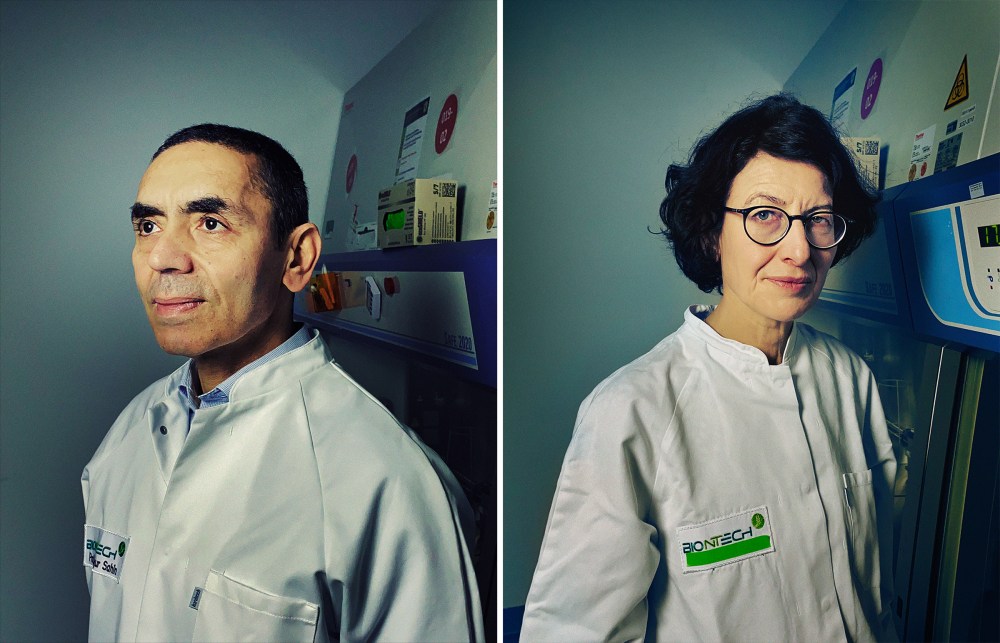
BioNTech co-founders Drs. Ugur Sahin and Ozlem Tureci in a BioNTech lab in Mainz, Germany, on Jan. 3.
Dina Litovsky—Redux for TIME Drs. Ugur Sahin and Ozlem Tureci, Co-founders, BioNTech. In January 2020, before many in the Western world were paying attention to a new virus spreading in China, Dr. Ugur Sahin was convinced it would spur a pandemic. Sahin, who in 2008 co-founded the German biotech company BioNTech with his wife Dr. Ozlem Tureci, went to work on a vaccine and by March called his contact at Pfizer, a much larger pharmaceutical company with which BioNTech had previously worked on an influenza vaccine using mRNA. Less than a year later, the Pfizer-BioNTech COVID-19 vaccine became the first ever mRNA vaccine available for widespread use. Even so, Sahin, BioNTech’s CEO, and Tureci, its chief medical officer, maintain that BioNTech is not an mRNA company but rather an immunotherapy company. Much of the couple’s work—both at BioNTech and at their previous venture, Ganymed—has focused on treating cancer. But it is mRNA, and the COVID-19 vaccine made possible by the technology, that has pushed the famously hardworking couple into the ­limelight—and helped them become one of the richest pairs in Germany, though they reportedly still bicycle to work and live in a modest apartment near their office.

Up until last year, vaccines had not changed very much, at least in concept, for more than two centuries. Most have been modeled on the discovery made in 1796 by the English doctor Edward Jenner, who noticed that many milkmaids were immune to smallpox. They had all been infected by a form of pox that afflicts cows but is relatively harmless to humans, and Jenner surmised that the cowpox had given them immunity to smallpox. So he took some pus from a cowpox blister, rubbed it into scratches he made in the arm of his gardener’s 8-year-old son and then (this was in the days before bioethics panels) exposed the kid to smallpox. He didn’t become ill.

Before then, inoculations were done by giving patients a small dose of the actual smallpox virus, hoping that they would get a mild case and then be immune. Jenner’s great advance was to use a related but relatively harmless virus. Ever since, vaccinations have been based on the idea of exposing a patient to a safe facsimile of a dangerous virus or other germ. This is intended to kick the person’s adaptive immune system into gear. When it works, the body produces antibodies that will, sometimes for many years, fend off any infection if the real germ attacks.

One approach is to inject a safely weakened version of the virus. These can be good teachers, because they look very much like the real thing. The body responds by making antibodies for fighting them, and the immunity can last a lifetime. Albert Sabin used this approach for the oral polio vaccine in the 1950s, and that’s the way we now fend off measles, mumps, rubella and chicken pox.

At the same time Sabin was trying to develop a vaccine based on a weakened polio virus, Jonas Salk succeeded with a safer approach: using a killed or inactivated virus. This type of vaccine can still teach a person’s immune system how to fight off the live virus but is less likely to cause serious side effects. Two Chinese companies, Sinopharm and Sinovac, have used this approach to develop vaccines for COVID-19 that are now in limited use in China, the UAE and Indonesia.

Another traditional approach is to inject a subunit of the virus, such as one of the proteins that are on the virus’s coat. The immune system will then remember these, allowing the body to mount a quick and robust response when it encounters the actual virus. The vaccine against the hepatitis B virus, for example, works this way. Using only a fragment of the virus means that they are safer to inject into a patient and easier to produce, but they are often not as good at producing long-term immunity. The Maryland-based biotech Novavax is in late-stage clinical trials for a COVID-19 vaccine using this approach, and it is the basis for one of the two vaccines already being rolled out in Russia.

The plague year of 2020 will be remembered as the time when these traditional vaccines were supplanted by something fundamentally new: genetic vaccines, which deliver a gene or piece of genetic code into human cells. The genetic instructions then cause the cells to produce, on their own, safe components of the target virus in order to stimulate the patient’s immune system.

For SARS-CoV-2—the virus that causes COVID-19—the target component is its spike protein, which studs the outer envelope of the virus and enables it to infiltrate human cells. One method for doing this is by inserting the desired gene, using a technique known as recombinant DNA, into a harmless virus that can deliver the gene into human cells. To make a COVID vaccine, a gene that contains instructions for building part of a coronavirus spike protein is edited into the DNA of a weakened virus like an adenovirus, which can cause the common cold. The idea is that the re-engineered adenovirus will worm its way into human cells, where the new gene will cause the cells to make lots of these spike proteins. As a result, the person’s immune system will be primed to respond rapidly if the real coronavirus strikes.

This approach led to one of the earliest COVID vaccine candidates, developed at the aptly named Jenner Institute of the University of Oxford. Scientists there engineered the spike-protein gene into an adenovirus that causes the common cold in chimpanzees, but is relatively harmless in humans.

The lead researcher at Oxford is Sarah Gilbert. She worked on developing a vaccine for Middle East respiratory syndrome (MERS) using the same chimp adenovirus. That epidemic waned before her vaccine could be deployed, but it gave her a head start when COVID-19 struck. She already knew that the chimp adenovirus had successfully delivered into humans the gene for the spike protein of MERS. As soon as the Chinese published the genetic sequence of the new coronavirus in January 2020, she began engineering its spike-protein gene into the chimp virus, waking each day at 4 a.m.

Her 21-year-old triplets, all of whom were studying biochemistry, volunteered to be early testers, getting the vaccine and seeing if they developed the desired antibodies. (They did.) Trials in monkeys conducted at a Montana primate center in March also produced promising results.

Bill Gates, whose foundation provided much of the funding, pushed Oxford to team up with a major company that could test, manufacture and distribute the vaccine. So Oxford forged a partnership with AstraZeneca, the British-Swedish pharmaceutical company. Unfortunately, the clinical trials turned out to be sloppy, with the wrong doses given to some participants, which led to delays. Britain authorized it for emergency use at the end of December, and the U.S. is likely to do so in the next two months.

Johnson & Johnson is testing a similar vaccine that uses a human adenovirus, rather than a chimpanzee one, as the delivery mechanism to carry a gene that codes for making part of the spike protein. It’s a method that has shown promise in the past, but it could have the disadvantage that humans who have already been exposed to that adenovirus may have some immunity to it. Results from its clinical trial are expected later this month.

In addition, two other vaccines based on genetically engineered adenoviruses are now in limited distribution: one made by CanSino Biologics and being used on the military in China and another named Sputnik V from the Russian ministry of health.

There is another way to get genetic material into a human cell and cause it to produce the components of a dangerous virus, such as the spike proteins, that can stimulate the immune system. Instead of engineering the gene for the component into an adenovirus, you can simply inject the genetic code for the component into humans as DNA or RNA.

Let’s start with DNA vaccines. Researchers at Inovio Pharmaceuticals and a handful of other companies in 2020 created a little circle of DNA that coded for parts of the coronavirus spike protein. The idea was that if it could get inside the nucleus of a cell, the DNA could very efficiently churn out instructions for the production of the spike-protein parts, which serve to train the immune system to react to the real thing.

The big challenge facing a DNA vaccine is delivery. How can you get the little ring of DNA not only into a human cell but into the nucleus of the cell? Injecting a lot of the DNA vaccine into a patient’s arm will cause some of the DNA to get into cells, but it’s not very efficient.

Some of the developers of DNA vaccines, including Inovio, tried to facilitate the delivery into human cells through a method called electroporation, which delivers electrical shock pulses to the patient at the site of the injection. That opens pores in the cell membranes and allows the DNA to get in. The electric pulse guns have lots of tiny needles and are unnerving to behold. It’s not hard to see why this technique is unpopular, especially with those on the receiving end. So far, no easy and reliable delivery mechanism has been developed for getting DNA vaccines into the nucleus of human cells.

That leads us to the molecule that has proven victorious in the COVID vaccine race and deserves the title of TIME magazine’s Molecule of the Year: RNA. Its sibling DNA is more famous. But like many famous siblings, DNA doesn’t do much work. It mainly stays bunkered down in the nucleus of our cells, protecting the information it encodes. RNA, on the other hand, actually goes out and gets things done. The genes encoded by our DNA are transcribed into snippets of RNA that venture out from the nucleus of our cells into the protein-manufacturing region. There, this messenger RNA (mRNA) oversees the assembly of the specified protein. In other words, instead of just sitting at home curating information, it makes real products.

Scientists including Sydney Brenner at Cambridge and James Watson at Harvard first identified and isolated mRNA molecules in 1961. But it was hard to harness them to do our bidding, because the body’s immune system often destroyed the mRNA that researchers engineered and attempted to introduce into the body. Then in 2005, a pair of researchers at the University of Pennsylvania, Katalin Kariko and Drew Weissman, showed how to tweak a synthetic mRNA molecule so it could get into human cells without being attacked by the body’s immune system.
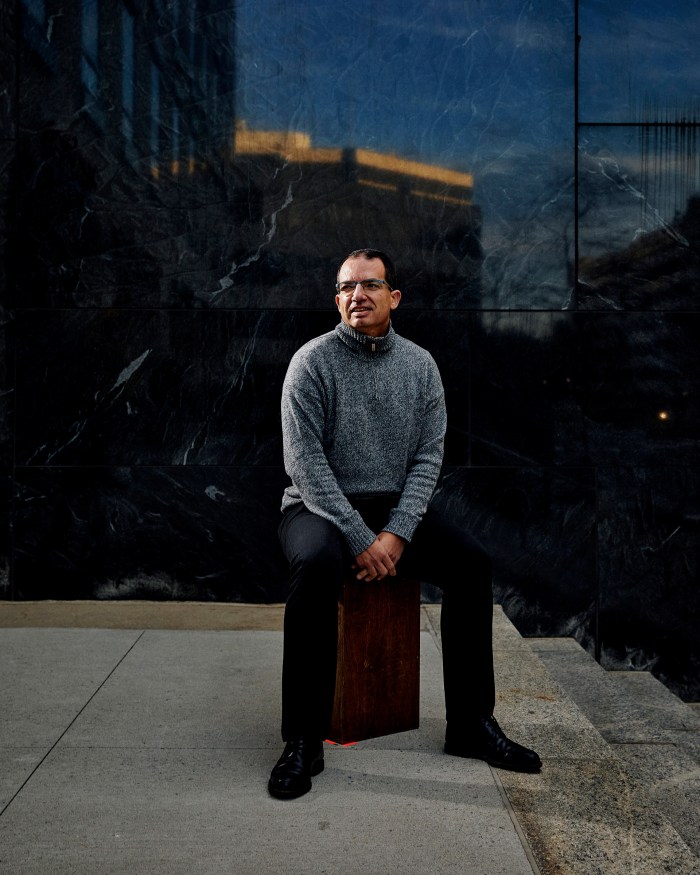
Cody O’Loughlin—The New York Times/ReduxStéphane Bancel, CEO, Moderna. Moderna’s COVID-19 vaccine was first tested in humans less than three months after news of the novel virus broke. But that lightning-fast development process belies the years of work that got Moderna to where it is today. The startup was founded in 2010 with the belief that mRNA technology, then still fairly new, could help treat any number of ailments. CEO Stéphane Bancel, pictured above, joined a year later. Moderna wasn’t originally focused on vaccines, but over time, its scientists began working toward vaccines against several infectious diseases as well as some forms of cancer. That experience came in handy when the COVID-19 pandemic arrived, leaving the world clamoring for a vaccine that could fight the deadly virus—and fast. Bancel’s company took the challenge in stride, using its mRNA platform to develop a vaccine around 95% effective at protecting against COVID-19 disease in less than a year.

When the COVID-19 pandemic hit a year ago, two innovative young pharmaceutical companies decided to try to harness this role played by messenger RNA: the German company BioNTech, which formed a partnership with the U.S. company Pfizer; and Moderna, based in Cambridge, Mass. Their mission was to engineer messenger RNA carrying the code letters to make part of the coronavirus spike protein—a string that begins CCUCGGCGGGCA … —and to deploy it in human cells.

BioNTech was founded in 2008 by the husband-and-wife team of Ugur Sahin and Ozlem Tureci, who met when they were training to be doctors in Germany in the early 1990s. Both were from Turkish immigrant families, and they shared a passion for medical research, so much so that they spent part of their wedding day working in the lab. They founded BioNTech with the goal of creating therapies that stimulate the immune system to fight cancerous cells. It also soon became a leader in devising medicines that use mRNA in vaccines against viruses.

In January 2020, Sahin read an article in the medical journal Lancet about a new coronavirus in China. After discussing it with his wife over breakfast, he sent an email to the other members of the BioNTech board saying that it was wrong to believe that this virus would come and go as easily as MERS and SARS. “This time it is different,” he told them.

BioNTech launched a crash project to devise a vaccine based on RNA sequences, which Sahin was able to write within days, that would cause human cells to make versions of the coronavirus’s spike protein. Once it looked promising, Sahin called Kathrin Jansen, the head of vaccine research and development at Pfizer. The two companies had been working together since 2018 to develop flu vaccines using mRNA technology, and he asked her whether Pfizer would want to enter a similar partnership for a COVID vaccine. “I was just about to call you and propose the same thing,” Jansen replied. The deal was signed in March.

By then, a similar mRNA vaccine was being developed by Moderna, a much smaller company with only 800 employees. Its chair and co-founder, Noubar Afeyan, a Beirut-born Armenian who immigrated to the U.S., had become fascinated by mRNA in 2010, when he heard a pitch from a group of Harvard and MIT researchers. Together they formed Moderna, which initially focused on using mRNA to try to develop personalized cancer treatments, but soon began experimenting with using the technique to make vaccines against viruses.

In January 2020, Afeyan took one of his daughters to a restaurant near his office in Cambridge to celebrate her birthday. In the middle of the meal, he got an urgent text message from the CEO of his company, Stéphane Bancel, in Switzerland. So he rushed outside in the freezing temperature, forgetting to grab his coat, to call him back.

Bancel said that he wanted to launch a project to use mRNA to attempt a vaccine against the new coronavirus. At that point, Moderna had more than 20 drugs in development but none had even reached the final stage of clinical trials. Nevertheless, Afeyan instantly authorized him to start work. “Don’t worry about the board,” he said. “Just get moving.” Lacking Pfizer’s resources, Moderna had to depend on funding from the U.S. government. Anthony Fauci, head of the National Institute of Allergy and Infectious Diseases, was supportive. “Go for it,” he declared. “Whatever it costs, don’t worry about it.”

It took Bancel and his Moderna team only two days to create the RNA sequences that would produce the spike protein, and 41 days later, it shipped the first box of vials to the National Institutes of Health to begin early trials. Afeyan keeps a picture of that box on his cell phone.

An mRNA vaccine has certain advantages over a DNA vaccine, which has to use a re-engineered virus or other delivery mechanism to make it through the membrane that protects the nucleus of a cell. The RNA does not need to get into the nucleus. It simply needs to be delivered into the more-accessible outer region of cells, the cytoplasm, which is where proteins are constructed.

The Pfizer-BioNTech and Moderna vaccines do so by encapsulating the mRNA in tiny oily capsules, known as lipid nanoparticles. Moderna had been working for 10 years to improve its nanoparticles. This gave it one advantage over Pfizer-BioNTech: its particles were more stable and did not have to be stored at extremely low temperatures.
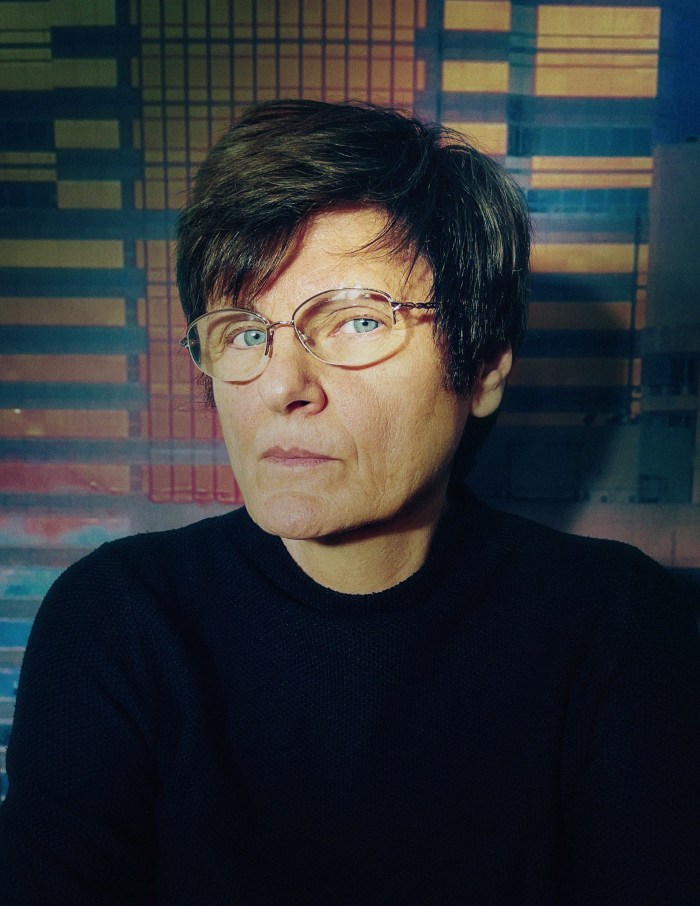
Dina Litovsky—Redux for TIMEKatalin Kariko, Senior vice president, BioNTech. In 1995, after years of struggle, Hungarian-born Katalin Kariko was pushed off the path to full professorship at the University of Pennsylvania. Her work on mRNA, molecules she believed could fundamentally change the way humans treat disease, had stalled. Then, in 1997, she met and began working with immunologist Drew Weissman. In 2005, they published a study describing a modified form of artificial ­mRNA—a discovery, they argued, that opened the door to mRNA’s use in vaccines and other therapies. Eventually, Kariko and Weissman licensed their technology to the German company BioNTech, where Kariko, shown here in a portrait shot by a photographer working remotely, is now a senior vice president. Her patience paid off this year. The mRNA-based Pfizer-­BioNTech corona­virus vaccine, which Kariko helped develop, has been shown to be 95% effective at preventing COVID-19.

By November, the results of the Pfizer-BioNTech and Moderna late-stage trials came back with resounding findings: both vaccines were more than 90% effective. A few weeks later, with COVID-19 once again surging throughout much of the world, they received emergency authorization from the U.S. Food and Drug Administration and became the vanguard of the biotech effort to beat back the pandemic.

The ability to code messenger RNA to do our bidding will transform medicine. As with the COVID vaccines, we can instruct mRNA to cause our cells to make antigens—molecules that stimulate our immune system—that could protect us against many viruses, bacteria, or other pathogens that cause infectious disease. In addition, mRNA could in the future be used, as BioNTech and Moderna are pioneering, to fight cancer. Harnessing a process called immunotherapy, the mRNA can be coded to produce molecules that will cause the body’s immune system to identify and kill cancer cells.

RNA can also be engineered, as Jennifer Doudna and others discovered, to target genes for editing. Using the CRISPR system adapted from bacteria, RNA can guide scissors-like enzymes to specific sequences of DNA in order to eliminate or edit a gene. This technique has already been used in trials to cure sickle cell anemia. Now it is also being used in the war against COVID. Doudna and others have created RNA-guided enzymes that can directly detect SARS-CoV-2 and eventually could be used to destroy it.

More controversially, CRISPR could be used to create “designer babies” with inheritable genetic changes. In 2018, a young Chinese doctor used CRISPR to engineer twin girls so they did not have the receptor for the virus that causes AIDS. There was an immediate outburst of awe and then shock. The doctor was denounced, and there were calls for an international moratorium on inheritable gene edits. But in the wake of the pandemic, RNA-guided genetic editing to make our species less receptive to viruses may someday begin to seem more acceptable.

Throughout human history, we have been subjected to wave after wave of viral and bacterial plagues. One of the earliest known was the Babylon flu epidemic around 1200 B.C. The plague of Athens in 429 B.C. killed close to 100,000 people, the Antonine plague in the 2nd century killed 5 million, the plague of Justinian in the 6th century killed 50 million, and the Black Death of the 14th century took almost 200 million lives, close to half of Europe’s population.

The COVID-19 pandemic that killed more than 1.8 million people in 2020 will not be the final plague. However, thanks to the new RNA technology, our defenses against most future plagues are likely to be immensely faster and more effective. As new viruses come along, or as the current coronavirus mutates, researchers can quickly recode a vaccine’s mRNA to target the new threats. “It was a bad day for viruses,” Moderna’s chair Afeyan says about the Sunday when he got the first word of his company’s clinical trial results. “There was a sudden shift in the evolutionary balance between what human technology can do and what viruses can do. We may never have a pandemic again.”

The invention of easily reprogrammable RNA vaccines was a lightning-fast triumph of human ingenuity, but it was based on decades of curiosity-driven research into one of the most fundamental aspects of life on planet earth: how genes are transcribed into RNA that tell cells what proteins to assemble. Likewise, CRISPR gene-editing technology came from understanding the way that bacteria use snippets of RNA to guide enzymes to destroy viruses. Great inventions come from understanding basic science. Nature is beautiful that way.

Isaacson, a former editor of TIME, is the author of The Code Breaker: Jennifer Doudna, Gene Editing, and the Future of the Human Race, to be published in March. After the Pfizer vaccine was approved, he opted to remain in the clinical trial and has not yet been “unblinded.”

sábado, 9 de enero de 2021

New story in Science and Health from Time: Seeding the Ocean: Inside a Michelin-Starred Chef’s Revolutionary Quest to Harvest Rice From the Sea Seeding the Ocean: Inside a Michelin-Starred Chef’s Revolutionary Quest to Harvest Rice From the Sea


There are very few things that Ángel León hasn’t done with the fruits of the sea.

In 2008, as a young, unknown chef, he took a loin from one fish and attached it to the loin of another, using collagen to bind the two proteins together. He called them hybrids and served them to unsuspecting diners at Aponiente, his restaurant in the southern Spanish port town of El Puerto de Santa María, just across the bay from Cádiz. He discovered that fish eyes, cooked at 55°C in a thermal circulator until the gelatin collapsed, made excellent thickening agents for umami-rich sauces. Next he found that micro-algae could sequester the impurities of cloudy kitchen stocks the same way an egg white does in classical French cooking. In the years since, León has used sea bass to make mortadella; mussels to make blood sausage; moray eel skin to mimic crispy pigskins; boiled hake to fashion fettuccine noodles; and various parts of a tuna’s head to create a towering, gelatinous, fall-apart osso buco.

It is these creations, and the relentless curiosity behind them, that have helped turn León into one of most influential chefs in the world. The Spaniards call him the Chef del Mar, a man singularly dedicated to the sea and its bounty. But Aponiente isn’t anything like other gilded seafood temples around the world. You won’t find Norwegian lobster there. Or Scottish langoustines. Or Hokkaido uni. In fact, unless you’re an Andalusian fisherman it’s unlikely you’ll know most of the species León serves to his guests.

That’s because León isn’t interested in plucking from the sea its most celebrated creatures. He wants to go deeper to find something you didn’t know existed: “What’s more hedonistic, eating something no one on the face of the earth has ever tried, or eating another f-cking spoon of caviar?” Jellyfish, sea worms, a bounty of sea “vegetables” foraged from the ocean floor: all have found their way onto his menu.

But for León, hedonism is beside the point. Everything that he does communicates an unshakable -commitment to honoring the ocean. He thinks about the sea the way a physicist or an astronomer thinks about the sky: as an infinitely discoverable space, where the right mix of curiosity and discipline can yield solutions to some of the most pressing problems of the 21st century. In his wide-eyed enthusiasm and boyish curiosity and fierce marine mania, he comes across as a mixture of Captain Nemo and Willy Wonka.

Follow León long enough, and you’ll learn that his venture ever deeper into the abyss isn’t a gastro free-for-all but part of a very specific dream that’s been taking shape in his head for years. A dream that extends well beyond the walls of his restaurant and into the coastal plains of Cádiz. In this dream, he sees men with long wooden brooms scraping the surface of the marshes, piling up coarse salt crystals in little white hills that shimmer in the Andalusian sun. He sees the region’s vast network of estuaries overflowing with flora and fauna—tiny, candy-sweet white shrimp, edible seaweeds like marine mesclun mix, sea bream and mackerel in dense silver schools. He sees a series of mills, stone-built and sea-powered, grinding through grains for the region’s daily bread. A wind-swept, sun-kissed saltwater economy, like the one that once made Cádiz a center of the world.

Founded by the Phoenicians in 1100 B.C., Cádiz is one of the oldest continuously inhabited cities in -Europe. Over the course of three millennia, many of the world’s greatest empires have settled here, attracted by the strategic location: a narrow appendage of land at the edge of the Iberian Peninsula, just beyond the mouth of the Mediterranean. The Romans, Visigoths and Muslims all had their Cádiz years, -fueling their empires with the wealth of this teeming water world. But it wasn’t until the Age of Exploration, when the city served as the launchpad for Spain’s greatest ambitions, including the second and fourth voyages of Columbus to the -Americas, that Cádiz became one of Spain’s wealthiest cities.

Those days have long passed. After Spain lost its American colonies in the 19th century, Cádiz never recovered. Today, it has the highest rate of unemployment of any region in Western Europe. León wants to fix that, to help rebuild the robust sea economy that defined Cádiz’s most storied years. His career has been a slow, steady fight to do just that.

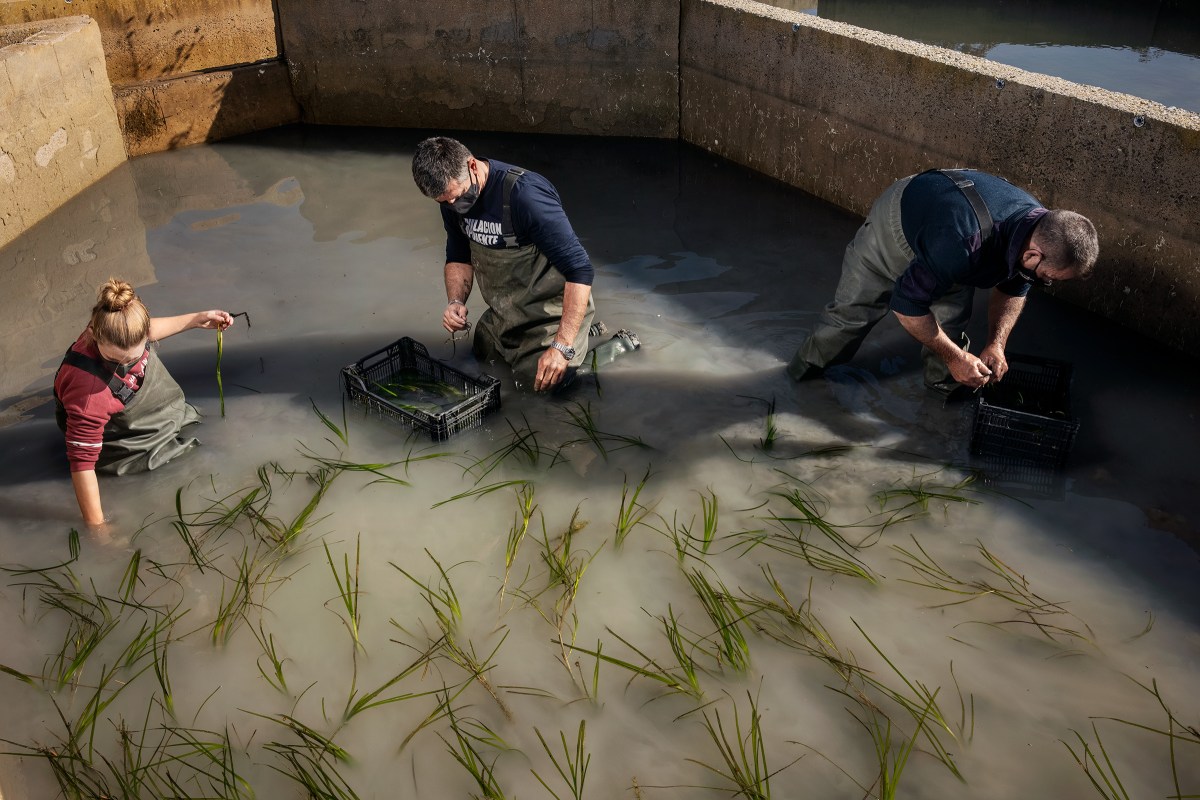
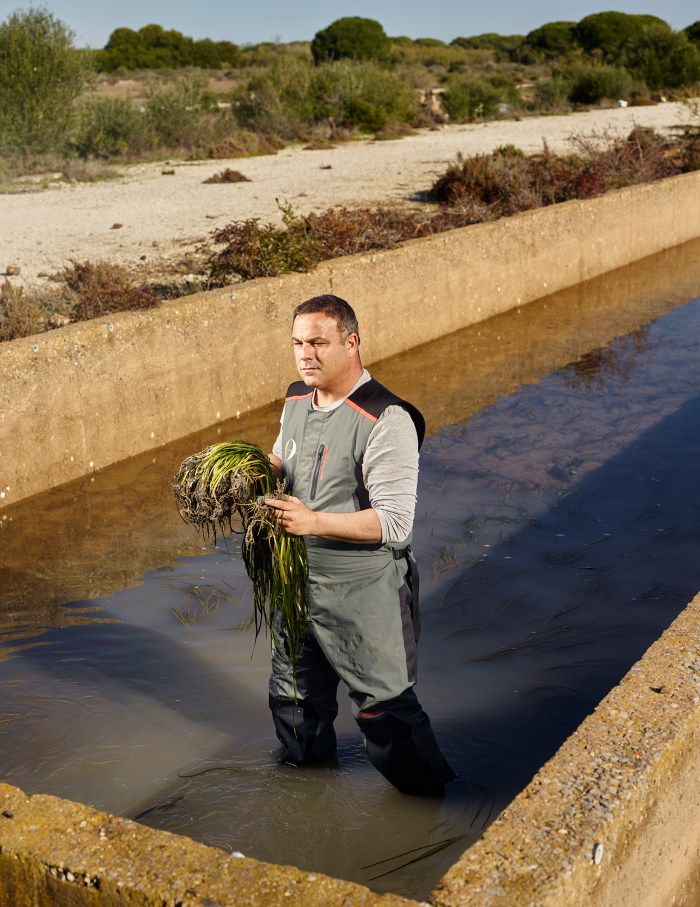
Juan Martín, center, of Aponiente works on the seagrass fields planted around León’s restaurant
Juan Martín, center, of Aponiente works on the seagrass fields planted near León’s restaurant

But now, he believes he’s discovered the centerpiece of his ambitious dream: fields of rice stretched out for miles of paddies, the feathery stalks -protruding from the sea itself. Scientists have long identified seagrasses as one of the most vital ecosystems in the fight against climate change, but what few knew is that those blades of grass also contain clusters of small, edible grains with massive potential. Of all the dreams León has chased in this quiet corner of southern Spain, this is the one he plans to build his future around. This, more than the Franken-fish or mussel sausage, is the one that could help rebuild his beloved region and, with any luck, even change the way we feed the world.


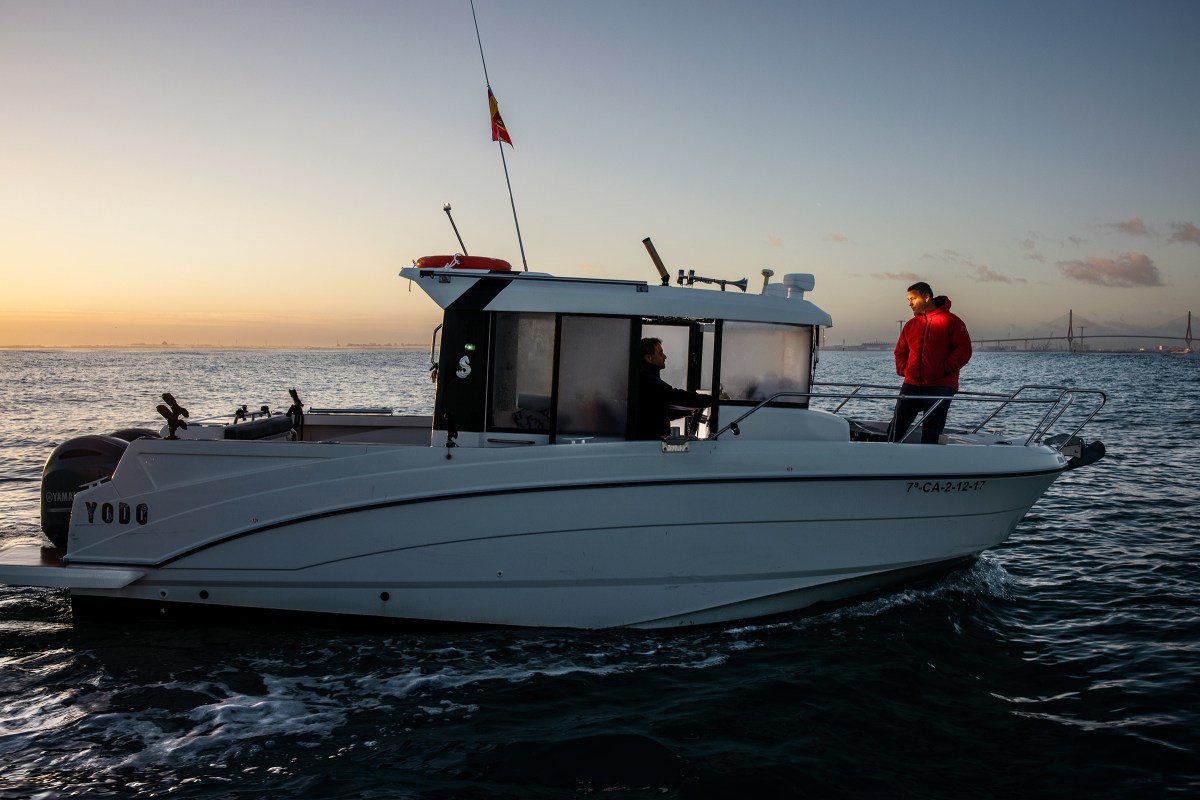
“The sea saved me,” León told me one morning in 2019 aboard his 26-ft. fishing boat, Yodo. The sun had just peeked above the horizon as we made our way past the tip of Cádiz, its church spires and mosque domes casting a silhouette of the city’s multi-layered history.

“I was a terrible student. Couldn’t sit still, always in trouble,” he said. “But when my dad took me out here on his boat, everything changed.”

León was born and raised in Cádiz, along with two older sisters and his younger brother Carlos, who helps manage Aponiente. Their dad kept a small fishing boat, and after school and on weekends, he would take his two sons out fishing in the Bay of Cádiz. Ángel León Lara, a hematologist, had high expectations, and often clashed with his son over his terrestrial troubles. “But once we were out on the water, we weren’t father and son,” says León. “We were friends.”

His brother Carlos saw a different sibling out on the water: “The boat is where the barrier between father and son broke down. We’d smoke a joint, tell stories, things that friends did.” Ángel couldn’t sit still long enough to be in a classroom, Carlos told me, but he was captive to the sea. “Most kids are scared to touch creatures from the sea. But Ángel would smell them, touch them, rub their scales, poke their eyes.”

León’s success at sea only served to underscore his struggles on land. His hyperactivity made him a menace in the classroom; he went to five high schools and barely graduated. He enrolled in a hotel school in Seville, where he studied cooking for three years and began to find his footing on terra firma. In 1996, he moved to France to cook at Le Chapon Fin, a Bordeaux institution that opened in 1825.

León remained quiet as we passed fishing boats and jetties on the outskirts of Cádiz, an espresso pinched between his fingertips. Since those early days with his dad, he’s rarely missed a sunrise on the water. His first goal when he fires up Yodo is to get out—out of cell-phone range, out of reach of his restaurant team and his family. “The truth is,” he said, staring- at my notebook, “I like to come out here alone.”

When we hit the open seas, the spell of silence was broken. “Turn left and you hit the Mediterranean, turn right and you’re in the Atlantic,” said León. “Two totally different worlds.” This nexus of two great bodies of water, where two vastly different ecosystems mix into a special cocktail of ocean life, continues to be a chief source of inspiration for León.

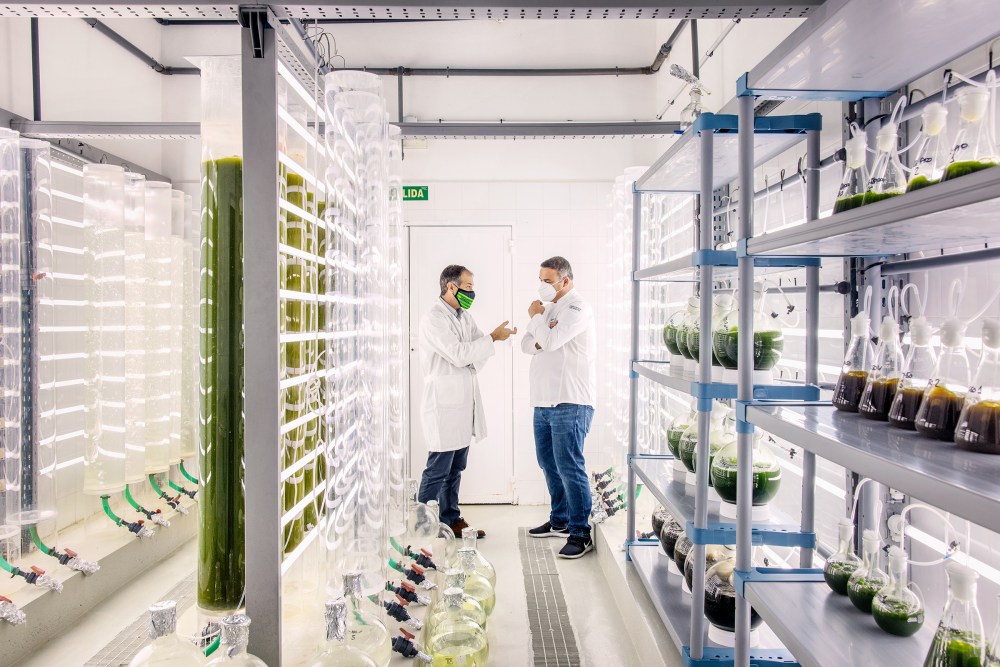
León in the marine plankton lab with its director Carlos Unamunzaga, left

León turned on the fish tracker and showed me the schools of fish swimming some 20 m below us. He opened up the bait storage in the rear of the boat, grabbed a squid the size of his hand and worked it onto a giant hook. He rolled another cigarette, put it to his lips and sank into his chair.

“Some days I don’t even fish. I come out here to clear my head. I used to be a -psychopath—-I’d go way out into the ocean on my own. But now I have a family to think about.” León and his wife Marta, who runs the more casual Taberna del Chef del Mar down the road from Aponiente, have a 5-year-old boy, Ángel. “Easily the best dish I’ve ever helped create.”

France taught León discipline—how to clarify a stock, how to debone a quail, how to cook 14 hours a day without complaining. Afterward, he bounced around, cooking in Seville, Toledo, Buenos Aires, preparing to start his own venture.

Back then, El Bulli, on the coast of Catalonia, was known as the best restaurant in the world, and its virtuoso leader, Ferran Adrià, was busy rewriting the rules for fine dining. By the time El Bulli closed in 2011, a generation of disciples had dispersed across the country, spreading the gospel of technical, modernist cuisine that shaped Spain into the gastronomic center of the world for the first decade of the 21st century.

While León is one of the few prominent chefs in the country who did not emerge from the El Bulli system, he carries within him the restaurant’s most enduring legacy: the need to question all conventions. When he opened Aponiente in 2007, León set out to change the way people thought about the ocean. Not just through a radical reimagining of what to do with familiar fish, but by looking for ingredients nobody had ever tasted. He built his menu around pesca de descarte, trash fish: pandora, krill, sea bream, mackerel, moray eel. But in León’s mind, these are some of the most noble and delicious creatures in the sea. He did this as much for the culinary challenge as for a growing streak of environmentalism.

For the first three years, people stopped by, read the menus and turned around. They didn’t -understand what this strange restaurant was trying to do. León found himself teetering on the edge of ruin.

He remembers a talk with Adrià in those early years that helped him trudge on. “Nobody understands me,” he said to the famous chef. “Perfect,” said Adrià. “That’s because you’re pushing the vanguard.”

Nothing was biting aboard Yodo. We were waiting for the tidal bulge, that moment before the tide turns when gravity and inertia cancel each other out—eight minutes of equilibrium that, according to León, is when fish are most active: “If we’re going to catch anything today, it will be then.”

When it hit, León cast his rod off the back edge of the boat and set the line, then ran inside and used the radar to try to position the boat -directly in the middle of what looked like a smudge on the screen. “This is where the action is.”

We sat in silence, waiting for the action, but the action never came and slowly the boat began to be sucked back toward the coastline. The tide had turned.

In 2010, after years of serving just a handful of guests a day, Aponiente won its first Michelin star, a recognition that León says “helped change everything.” In 2014, it won a second star, and suddenly people began to travel to Cádiz specifically to eat at the restaurant. By the time it received its third Michelin star in 2017, Aponiente had gained a strong international presence. León used the growing platform to sharpen his message, working with universities on sustainability projects, organizing events with chefs and academics to discuss the fragility of our ocean ecosystems, developing commercial products like sea bacon, made from the discarded bellies of sea bream and smoked over pineapple.

For all his success, León is not your typical celebrity chef. He rarely leaves his hometown, eschewing the international circuit in favor of long mornings on the water and long evenings in the lab. His clipped-consonant Spanish and small-town humility are more befitting of a fisherman.

“He’s carving out his own path in the food world,” said Cristina Jolonch, one of Spain’s most respected food critics, but “it’s his defense of the sea that -matters most.” León is aware of that. “The day that I have nothing more to offer beyond being a good cook, Aponiente will no longer make sense.”

Every year in January, León and his R&D team travel by train to Madrid Fusion, the food world’s pre-eminent culinary conference, to dazzle auditoriums of journalists and chefs with their latest discoveries. In 2009, he unveiled an edible form of phytoplankton, now used in kitchens across the world. In 2011, León announced the first line of seafood–based charcuterie, using discarded fish parts to make mortadella and blood sausage and chorizo, all dead ringers for the real thing. In 2016, the auditorium went dark as León emerged on the stage with a special cocktail filled with luz de mar, bioluminescent bits found in the bellies of tiny crabs that glowed like a galaxy of stars as he swirled his gin and tonic.

In 2018, León and his team decided to take a different approach. He explained: “We turned the sea upside down. We wanted to really look at the ocean floor to see what secrets it held.” What they found in the murky depths was a vast and varied garden of ocean flora: roots, fruits, leaves. León has a tendency to liken everything he finds underwater to a terrestrial analog, and soon his menus were brimming with sea pears, sea tomatoes, sea artichokes. The so-called vegetables didn’t have the same impact as sparkling crab guts or fish-belly bacon, but León knew he needed to keep his focus on the ocean floor.

That’s how he found something he had been staring at all along. León remembered as a kid in Cádiz seeing vast fields of rice along the fringes of the bay. As he talked to his team, he realized that what he -recalled as rice was actually Zostera marina, eelgrass that grows in coastline meadows around the world.

Juan Martín, Aponiente’s resident biologist who has worked with León for years, knew the plant well. “I had been studying seagrasses for 15 years—but always from the standpoint of the ecosystem. It never occurred to me or anyone else studying it that it was edible.” That is, until León showed up one day at Aponiente with a printout of a 1973 article in Science documenting the diet of the Seri, hunters and gatherers of Sonora, Mexico, who have eaten eelgrass for generations. Like many grains, it required an elaborate process of threshing, winnowing, toasting and pulverizing before being cooked into a slurry with water. The Seri ate the bland paste with condiments to punch up the flavor: honey or, preferably, sea-turtle oil.

León on his boat, Yodo, in the early morning
León on his boat, Yodo, in the early morning of Dec. 15

León’s R&D team set out to study the plant in detail, signing an agreement with the University of Cádiz to partner on the research. “Zostera had been gathered and consumed before, but it had never been cultivated,” said Martín. “That’s a whole different proposition.” They worked with the university to define the ideal growing conditions: water current, temperature, salinity, depth, sunlight.

In the summer of 2019, León and a small crew of cooks and scientists waded out into an estuary a few miles east of the restaurant and pulled bushels of eelgrass from the ocean bed. In total, they collected 50 kg of grains, more than enough to run nutritional analysis and experiments in the kitchen.

“When we first started this process, so many things could have gone wrong,” said David Chamorro, the head of R&D at Aponiente. But one by one, the variables fell in their favor: a perennial plant with exponential growth and a stout nutritional profile, including a payload of fiber and omega-3 fats—and gluten-free.

As for the taste? “For a year, we were working on this grain and we had no clue how it tasted,” said León. “I was nervous. What if it tastes like sh-t? The day I ate it, I was relieved.”

I first tasted eelgrass on a rainy afternoon in late 2019 in the upstairs research laboratory of Aponiente. Downstairs, the staff cooked and served what would turn out to be the final meal before the COVID-19 pandemic kept the restaurant closed throughout the spring of 2020 until it reopened in July. Zostera grains look more like amaranth or a chia seed than rice—a short, pellet-like grain with a dark complexion. León boiled it like pasta, passed me a spoonful, then watched me closely as I processed. The first thing you notice is the texture: taut-skinned and compact, each grain pops on your tongue like an orb of caviar. It tasted like the love child of rice and quinoa with a gentle saline undertow.

I asked León about the ideas the grain inspired in the kitchen, but he didn’t seem ready to talk. Chamorro, for his part, was positively giddy about the possibilities: pressing the grain to make oil, fermenting it into sake, grinding it into flour. “Imagine if we gave 10 kilos of flour to the 10 best bakers in Spain. The types of breads we’d see—and all of them gluten-free.”

But before the world sees eelgrass baguettes and eelgrass wine, it will first need to see more eelgrass. Having partnered with Esteros Lubimar, a fisheries company based out of Cádiz, León and his team have drawn up an ambitious plan for domesticating eelgrass. Rather than starting from seed, a process that requires patience that León doesn’t have, they are harvesting eelgrass from different coastal areas around Spain and transplanting it to the Bay of Cádiz.

If all goes according to plan, they will harvest 12 acres of eelgrass in the summer of 2021. León and team will use most of those seeds (about 22,000 kg) to expand the eelgrass significantly in 2022–2023, and he will keep about 3,000 kg to cook with at the restaurant and experiment with in the lab.

With more than 5,000 hectares of estuaries and abandoned salt beds strewn across the region, if León and team have their way, Cádiz could soon be home to one of the largest eelgrass meadows on the planet.

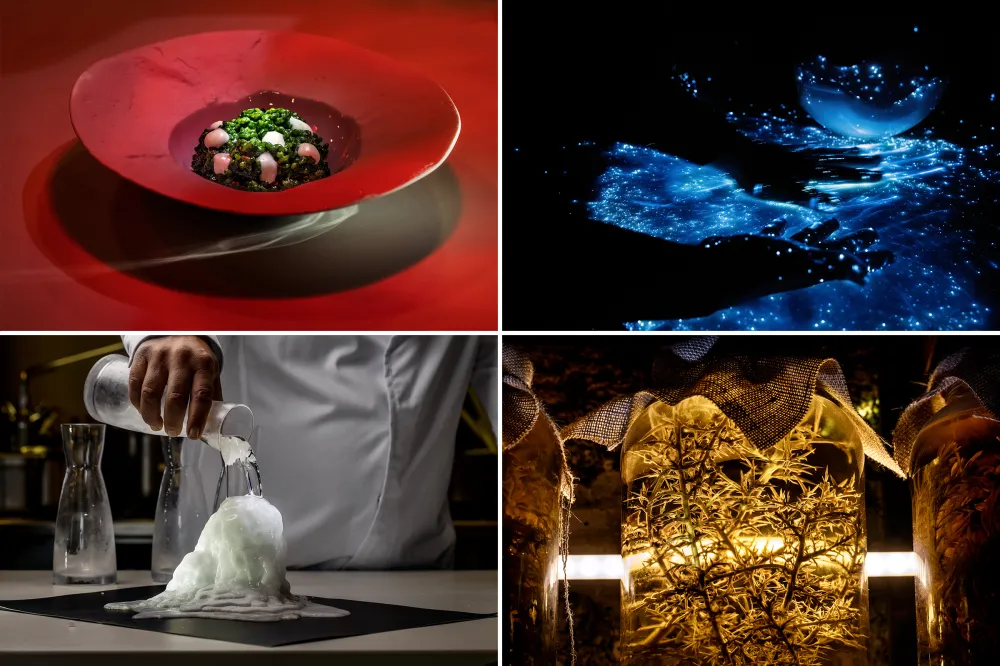
From top left, clockwise: A plankton rice dish at Aponiente; León performs Luz del Mar, mixing two proteins to get fluorescence; a halophyte plant at the restaurant lab; León performs the Sal viva technique

The only thing less sexy than grass is grass that grows in water. When Robert Orth, professor of biological sciences at the Virginia Institute of Marine Science, started researching seagrass in 1969, he found it a very lonely field: “You could literally count the number of papers published by scientists on one hand.” According to Orth, people either think seagrass is gross, a nuisance—or that it doesn’t exist at all. “Seagrasses are the ugly duckling of the environmental movement,” he says. “They’re not colorful like coral or beautiful like mangroves.”

But there is something extraordinary about seagrasses: they are the only plants that flower fully submerged in salt water. They have all the equipment of a terrestrial plant—roots, stems, rhizomes, leaves, flowers, seeds—but they thrive in under-water environments. Seagrasses like Zostera marina are eco-system engineers: the meadows they form along coastlines represent some of the most biodiverse areas in the ocean, playing host to fauna (like seahorses, bay scallops and sea turtles) that would struggle to survive without seagrass.

But anthropogenic forces—climate change, pollution, coastal development—have threatened eelgrass meadows across the world. As León and team refine the conditions for large-scale cultivation, they hope to facilitate its growth along coastlines around the world—Asia, North America and, above all, across the Straits of Gibraltar in Africa—turning millions of hectares into a source of food, protection against erosion and a weapon against climate change.

“In terms of the ecological importance of seagrasses, it’s impossible to say too much about them,” said Jeanine Olsen, professor emeritus at the University of Groningen in the Netherlands. “They don’t have the poster-child appeal of coral reefs, but they are just as important in terms of -productivity, biodiversity, carbon sequestration and habitat.”

For all the talk about the Amazon being Mother Nature’s lungs, rain forests are only the fifth most efficient carbon sink on the planet. Seagrass meadows are second only to tundra in their ability to sequester carbon, absorbing carbon up 35 times faster than the same area of tropical rain forest.

But, like many of our best tools for combatting rising temperatures, seagrass meadows have been dying off at an alarming rate over the past several decades, thanks to a combination of rising water temperatures and increased human activity along coastlines. The lack of awareness has only accelerated the decline.

In 2006, Orth and more than a dozen scientists published a paper in BioScience on the alarming decline in seagrasses around the world: “Salt marshes, mangroves and coral reefs receive threefold to 100-fold more media attention than seagrass eco-systems, although the services provided by seagrasses, together with algal beds, deliver a value at least twice as high as the next most valuable habitat.”

It appears Orth and his colleagues’ message got out. In the years since, the field has grown precipitously, with more money and more research. Restoration projects are under way all over the world, including one in the coastal lagoons along Virginia’s eastern shore, overseen by Orth, that has regenerated more than 3,500 hectares of seagrass meadows.

Up until this article, León’s project has been a closely guarded secret. Not even the local Spanish marine biologists know what’s happening. I spoke and exchanged emails with half a dozen of the top seagrass experts around the world, and each responded with their own version of surprise. None more than Carlos Duarte, whose broad base of marine expertise has brought him from the tropics to the North Pole, from dense coastal ecosystems to the unknown depths of the “dark ocean.”

León in the sea rice plantation

What León is doing is unprecedented, Duarte told me on the phone from Mallorca. I had just shared the news with him. “This will be the first eelgrass that will be domesticated,” he finally said, more to himself than to me. “They will be pioneers.” Then, after another pause. “It’s a big achievement.”

Duarte knows the area and the conditions well, and though he stressed that the yield for eelgrass tends to be low, he said it—along with other factors like taste and nutrition—can be improved through genetic selection. “The things that have gone wrong with traditional agriculture won’t be affected in the sea. No fertilizers, no pesticides, no insects,” he says. “It will be by default a green sustainable crop. You’re not taking an exotic species and bringing it here. You’re taking one of the jewels of the Bay of Cádiz and just making more of it.”

But there’s another side to the equation that wasn’t part of any seagrass scientist’s -environmental -calculations: the water itself. Nearly 97% of all water on earth is salt water. For all our brains and ambition, humans have never figured out much to do with salt water. We use it to cool thermo-electric power plants. We use it in some forms of mining. Most of our efforts and resources have been focused on turning salt water into fresh water, but desalinization remains expensive.

Just 1% of all water on earth is readily available fresh water, and the planet is growing thirstier by the day. According to the U.N.’s Food and Agriculture Organization, humans will need to increase agricultural output by 60% to feed the nearly 10 billion people expected to live on earth by 2050. But just as our demand for fresh water has never been greater, our supplies have never been in more doubt. Climate models predict that rest of the 21st century will be a roller coaster of historic droughts and historic floods, jeopardizing the world’s food supplies. Finding a way to use salt water in agriculture would dramatically alter the calculus for feeding the planet.

The Dutch have taken the lead in saltwater agriculture. Government funded efforts to introduce salt-water-receptive genes to traditional vegetables like potatoes, tomatoes and carrots show promise. For the Chinese, the world’s largest consumers and growers of rice, saltwater rice has been the holy grail for nearly four decades. Yuan Longping, the agronomist who first developed high-yield hybrid rice back in the 1970s, has been trying to crack the code since the early 1980s. In 2018, Yuan and his team successfully grew salt-water rice in the desert flats outside of Dubai, achieving more than double the average global rice yield.

But they did this through decades of crossbreeding, and by diluting salt water with fresh water. What León is after is something different altogether: a -native plant, capable of delivering immense nutritional and ecological benefits, grown directly in ocean beds.

Rice may be the world’s top source of calories, but it also requires two increasingly scarce resources: land and fresh water. And the cocktail of gases—carbon dioxide, methane, nitrous oxide—created during rice cultivation has been found to contribute to climate change. León’s sea rice, by contrast, has a similar yield as terrestrial rice but can grow in any temperate coastal area in the world, all the while sequestering excess carbon.

A few of the experts I spoke with expressed concerns about the logistical challenges of cultivating Zostera marina. “Eelgrass is a complex problem,” Orth told me. “You have to have all the right conditions: light, temperature, current.”

The challenges aren’t lost on Juan Martín, but Martín points out that the estuaries where they’ll be planting the eelgrass give the team full control of the elements. León and team have also been working with geneticists in the hopes of improving some of the core characteristics of Zostera.

“Rice has the advantage of 7,000 years of genetic modifications,” said Martín. “In very little time, we could make huge improvements.”

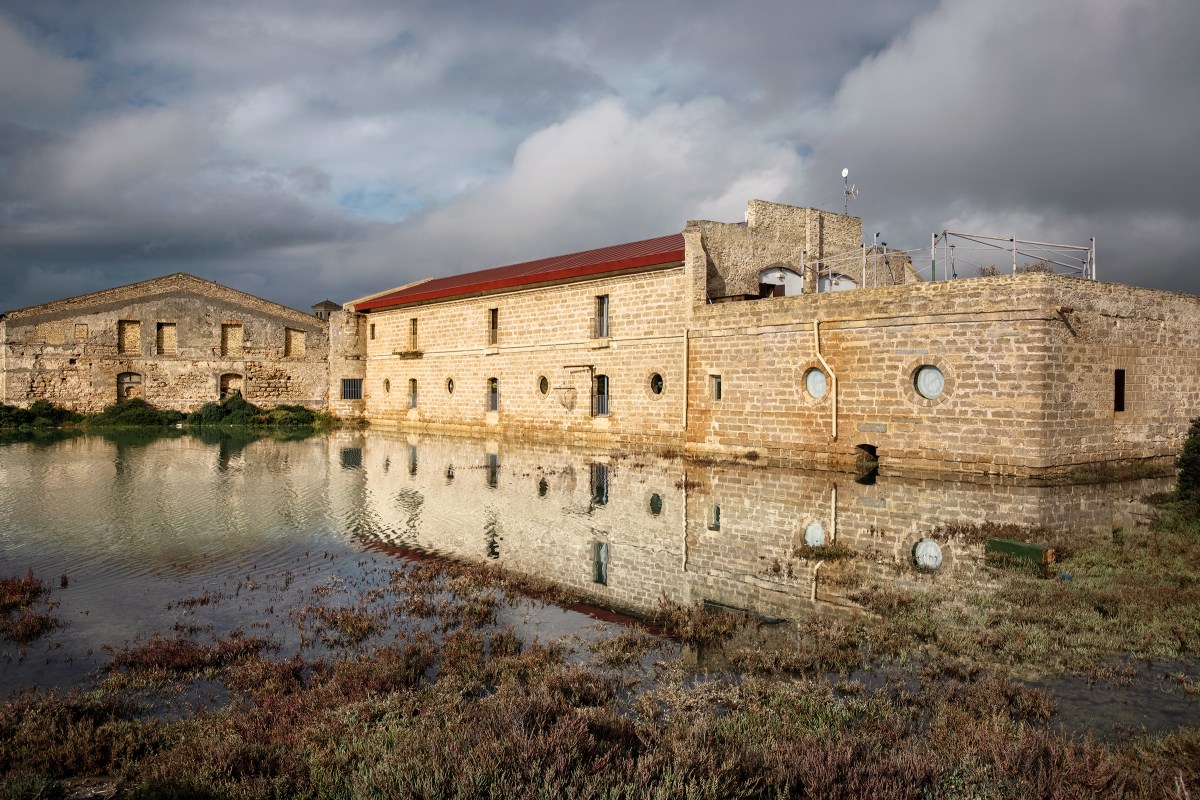
León’s Aponiente restaurant, in a centuries-old mill, surrounded by the estuary where he will cultivate his underwater garden

León is thinking ahead. Not just to a supercharged version of his saltwater rice, but he and his team have discussed the possibility of isolating the saline genes in Zostera marina to crossbreed with other staples: corn, lentils, lettuce.

“It’s not just the rice,” said León. “It’s the dream of having an underwater garden for human beings.”

“This is where we’ll plant the rice, out there in the distance,” said León, pointing from the second-floor terrace of the old mill that houses Aponiente to the sunbaked estuaries below. “The waters will be packed with life: shrimp, oysters, sea bream. Next year, the guests won’t start their meals in the restaurant, but right on the water, catching the first bites of their meal.”

He gave me this tour over FaceTime in the early summer. It was supposed to be in person, the two of us taking in the young eelgrass meadows he hoped to plant in the late spring, but then COVID-19 crushed Spain and the country shut down until late June. León had his shirt off, a cigarette pinched by the boyish smile that had all but disappeared. The restaurant was slated to open the following day, and he had just done a final tasting for a menu nine months in the making. The unifying concept would be an edible interpretation of the tidal marshes. There would be emerald puddles of plankton butter and marine bone marrow and burrata forged from sea snails. For León, the star of the season was the gusana del mar, a species of sea worm.

Despite concerns from his staff and partners, León has insisted the worm be a central part of the menu. After a dozen different experiments, he settled on a grilled sea-bream cheek with a rich herby fish broth and a crunchy sea-worm garnish.

But even as he talked me through the details of the final menu, I could tell his mind was elsewhere. He sounded relieved when I asked about the plants. “It’s finally happening,” he says. “On July 17, we have our crews going out to collect Zostera from Galicia and Cantabria. We should have it all planted by the early fall.”

With the meadow finally taking shape in his mind, he had a new problem to worry about: “What am I going to cook with 22,000 kg of sea rice?” he asked, his wide-eyed grin swaddled by a cloud of smoke. “This whole process has been like giving birth, and the cook in me died somewhere along the way. I had too much fear, too much respect for every f-cking grain.”

He had come back inside now, taking a seat at a long table inside the office he had renovated during the lockdown. Behind him, on a long white wall, a local artist had mounted the heads of the major species of fish in the Bay of Cádiz, 35 in total. It had the effect of making León look like a cartoonish hero, with an army of sea creatures at his back.

“Imagine making a mochi made from ground Zostera flour and pulverized shrimp … Or playing with textures of al dente Zostera pasta … Serve it in two rounds: first the husk, then the grain itself … We can harvest it early, when the seeds are like baby favas, and use it like spring peas but with the flavor of the sea …” León kept going, ticking through half a dozen other ideas before taking a breath.

León likes to say that he’s just a simple cook. It doesn’t read as false modesty as much as an expression of his abiding disbelief that a pirate–mouthed kid from one of Spain’s poorest regions who barely graduated high school could find himself in a position to do things no one else ever has. But there he was, on the brink of another breakthrough.

He explained: “How much do we miss from scientists who have spent their entire lives studying one thing? Sometimes you spend all day staring through a microscope and you don’t look up long enough to remember that you’re hungry.”

As he was talking, he began to run his hand over the heads of the sea creatures hanging from his wall: mackerel, squid, dogfish. He settled on the spotted snout of the mounted moray eel—the same species fishermen since the dawn of time have given back to the sea but with which León had built a career fashioning crispy chicharróns and soufflé “potatoes” and suckling pig of the sea.

“You need the science, but you also need the hunger.”

viernes, 8 de enero de 2021

New story in Science and Health from Time: E.U. Regulators Approve Drawing up To Six Doses From BioNTech-Pfizer Vaccine Vials E.U. Regulators Approve Drawing up To Six Doses From BioNTech-Pfizer Vaccine Vials


(BRUSSELS) — The European Union’s drug agency on Friday approved doctors drawing up to six doses from each vial of the coronavirus vaccine made by BioNTech-Pfizer, a move that could speed up the pace of vaccinations in the 27-nation bloc.

The European Medicines Agency said its human medicines committee recommended updating the product information for the vaccine to clarify that each vial contains six doses instead of the five that were advised when it originally greenlighted the Pfizer-BioNTech vaccine on Dec. 21.

German Health Ministry spokesman Hanno Kautz told reporters in Berlin that the change would come into effect immediately, boosting available doses of the vaccine by 20%.

Many doctors across the EU have already been drawing six doses of the vaccine from each vial, a practice that is already permitted in the United States, Britain and elsewhere.

Pharmaceutical companies regularly put more vaccine than necessary into vials so minimum dosage can be ensured even if there is some spillage.

The news came shortly after the EU’s executive arm said it had secured 300 million extra doses of the Pfizer-BioNTech vaccine. European Commission President Ursula von der Leyen said the new agreement to buy more doses will double the amount ordered by the 27-nation bloc.

The EU commission later detailed in a statement that it offered to member states to purchase an additional 200 million doses of the vaccine, with the option to acquire another 100 million doses.

“This would enable the EU to purchase up to 600 million doses of this vaccine, which is already being used across the EU. The additional doses will be delivered starting in the second quarter of 2021,” the EU said. Von der Leyen said 75 million of the extra doses would be available during the second quarter, with the rest being delivered throughout 2021.

Combined with a contract with Moderna for its vaccine, the EU now has the capacity to vaccinate 380 million people, Von der Leyen said, more than 80% of the EU’s population.

The EU has sealed six vaccine contracts for up to 2 billion doses, with Moderna, AstraZeneca, Sanofi-GSK, Janssen Pharmaceutica NV, Pfizer-BioNTech and CureVac. But only the Pfizer-BioNTech and Moderna vaccines have been approved for use so far in the 27-nation bloc.

Von der Leyen’s announcement came amid growing criticism, notably in Germany, about the decision to let the commission handle vaccine purchases for all EU member nations. Vaccination programs in the EU have gotten off to a slow start, and some EU members have been quick to blame the European Commission for a perceived failure to deliver the right number of doses.

The EU has defended its strategy, insisting that vaccination programs have just started and that large deliveries are foreseen for around April.

“We were faced with a situation where we had huge demand, but the production capacity had not kept pace with that as yet. Now, we have a positive step forward,” von der Leyen said.

Amid reports that some EU countries tried to secure separate deals with vaccine manufacturers, von der Leyen also made clear that such negotiations would violate the agreement accepted by all the bloc’s members.

“We have all agreed, legally binding, that there would be no parallel negotiations, no parallel contract,” she said. “So the framework we are all working in is a framework of 27. Together we are negotiating, together we are procuring and together we are bringing forward this vaccination process.”

___

Corder reported from The Hague, Netherlands. Frank Jordans contributed from Berlin.

New story in Science and Health from Time: 2020 Ties With 2016 for Warmest Year Ever Recorded 2020 Ties With 2016 for Warmest Year Ever Recorded


For a year of dubious superlatives, 2020 has left the planet one last parting gift. On 8 Jan., the European Union’s Copernicus Climate Change Service (C3S), which tracks global climate trends announced that not only had 2020 tied with 2016 for the hottest year on record, it also capped the warmest decade on record. For Europeans, there was an extra bonus: the region just had its hottest year ever. If there was ever any doubt that the world is heating up due to increased fossil fuel emissions, they have been effectively quashed.

In a year already defined by the record melting of Greenland’s glaciers, near-record levels of shrinking Arctic sea ice, wildfires blazing across Siberia, and the hottest temperature ever recorded in Antarctica, the latest findings shouldn’t be surprising, says senior C3S scientist Freja Vamborg. “Inevitably if you have an upward trend, which we have been seeing for some time now, well, at some point you are going to bypass annual records and eventually decadal ones as well. As long as we are don’t reduce the greenhouse gas emissions that are the main driver behind this increase, then we will continue breaking these records.”

Nor should anyone be letting out a sigh of relief for the fact that we only tied 2016 for hottest year. The year 2016 was marked by a particularly strong El Niño event, a weather pattern that generally contributes to warmer temperatures. 2020, by contrast, was dominated by a La Niña weather cycle, which actually lowered temperatures in the Pacific. “In general, the expectation is that if you have El Niño, you get a warming like in 2016, and with a La Niña, you tend to have a cooling effect over a large portion of the globe,” says Vamborg. In this case, the cooler pacific temperatures were countered by unusual spikes further north: the biggest leaps in temperature deviation from the 1981-2010 average were in the Arctic, where temperatures surpassed 6°C for the year as a whole, and more than 8°C in some regions in some months. Western Siberia experienced an exceptionally warm winter and spring, conditions that precipitated the summer’s unprecedented wildfires.

Read more: 2020 Was a Year of Climate Extremes. What Can We Expect in 2021?

Europe’s record-breaking year started out with an unusually warm winter (December 2019-February 2020) that exceeded the previous 2016 extreme by almost 1.4°C. That’s perilously close to the 1.5°C warming goal set by the Paris Climate Accords as the maximum amount of warming the world should experience. Of course the Paris figure is meant to be an average over time, not a one off. Still, says Vamborg, record breaking months, years and decades bring us ever closer. “As the rising temperature trend continues, we will at some point have years that hit 1.5, then pass 1.6 and eventually that target will be reached. And the only way to stop that that is to reduce greenhouse gas emissions, and quickly, because indeed we are marching in that direction.”

lunes, 4 de enero de 2021

New story in Science and Health from Time: Global Warming Already Baked In Will Blow Past Climate Goals, a New Study Says Global Warming Already Baked In Will Blow Past Climate Goals, a New Study Says


The amount of baked-in global warming, from carbon pollution already in the air, is enough to blow past international agreed upon goals to limit climate change, a new study finds.

But it’s not game over because, while that amount of warming may be inevitable, it can be delayed for centuries if the world quickly stops emitting extra greenhouse gases from the burning of coal, oil and natural gas, the study’s authors say.

For decades, scientists have talked about so-called “committed warming” or the increase in future temperature based on past carbon dioxide emissions that stay in the atmosphere for well over a century. It’s like the distance a speeding car travels after the brakes are applied.

But Monday’s study in the journal Nature Climate Change calculates that a bit differently and now figures the carbon pollution already put in the air will push global temperatures to about 2.3 degrees Celsius (4.1 degrees Fahrenheit) of warming since pre-industrial times.

Previous estimates, including those accepted by international science panels, were about a degree Celsius (1.8 degrees Fahrenheit) less than that amount of committed warming.

International climate agreements set goals of limiting warming to 2 degrees Celsius (3.6 degrees Fahrenheit) since pre-industrial times, with the more ambitious goal of limiting it to 1.5 degrees Celsius (2.7 degrees Fahrenheit) added in Paris in 2015. The world has already warmed about 1.1 degrees Celsius (2 degrees Fahrenheit).

“You’ve got some … global warming inertia that’s going to cause the climate system to keep warming, and that’s essentially what we’re calculating,” said study co-author Andrew Dessler, a climate scientist at Texas A&M University. “Think about the climate system like the Titanic. It’s hard to turn the ship when you see the icebergs.”

Dessler and colleagues at the Lawrence Livermore National Lab and Nanjing University in China calculated committed warming to take into account that the world has warmed at different rates in different places and that places that haven’t warmed as fast are destined to catch up.

Places such as the Southern Ocean, surrounding Antarctica are a bit cooler, and that difference creates low-lying clouds that reflect more sun away from earth, keeping these places cooler. But this situation can’t keep going indefinitely because physics dictates that cooler locations will warm up more and when they do, the clouds will dwindle and more heating will occur, Dessler said.

Previous studies were based on the cooler spots staying that way, but Dessler and colleagues say that’s not likely.

Outside experts said the work is based on compelling reasoning, but want more research to show that it’s true. Breakthrough Institute climate scientist Zeke Hausfather said the new work fits better with climate models than observational data.

Just because the world is bound to get more warming than international goals, that doesn’t mean all is lost in the fight against global warming, said Dessler, who cautioned against what he called “climate doomers.”

If the world gets to net zero carbon emissions soon, 2 degrees of global warming could be delayed enough so that it won’t happen for centuries, giving society time to adapt or even come up with technological fixes, he said.

“If we don’t, we’re going to blow through (climate goals) in a few decades,” Dessler said. “It’s really the rate of warming that makes climate change so terrible. If we got a few degrees over 100,000 years, that would not be that big a deal. We can deal with that. But a few degrees over 100 years is really bad.”