martes, 7 de septiembre de 2021

New story in Science and Health from Time: A Climate Solution Lies Deep Under the Ocean—But Accessing It Could Have Huge Environmental Costs A Climate Solution Lies Deep Under the Ocean—But Accessing It Could Have Huge Environmental Costs


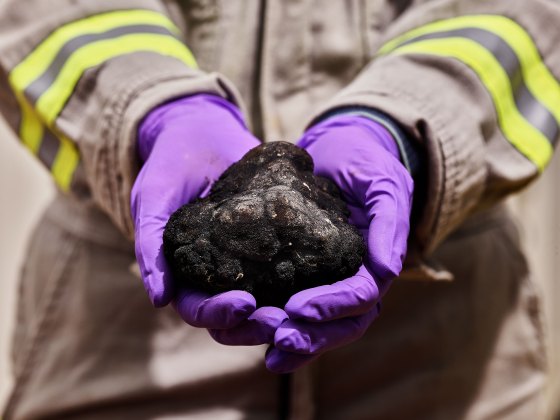
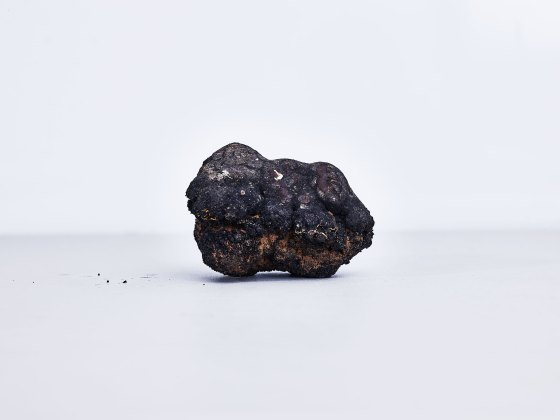
Scattered three miles deep along the floor of the central Pacific are trillions of black, misshapen nuggets that may just be the solution to an impending energy crisis. Similar in size and appearance to partially burned charcoal briquettes, the nuggets are called polymetallic nodules, and are an amalgamation of nickel, cobalt, manganese and other rare earth metals, formed through a complex biochemical process in which shark teeth and fish bones are encased by minerals accreted out of ocean waters over millions of years.

Marine biologists say they are part of one of the least-understood environments on earth, holding, if not the secret to life on this planet, at least something equally fundamental to the health of its oceans. Gerard Barron, the Australian CEO of seabed-mining company the Metals Company, calls them something else: “a battery in a rock,” and “the easiest way to solve climate change.” The nodules, which are strewn across the 4.5 million-sq-km (1.7 million-sq-mi.) swath of international ocean between Hawaii and Mexico known as the Clarion-Clipperton Zone (CCZ), contain significant amounts of the metals needed to make the batteries that power our laptops, phones and electric cars. Barron estimates that there is enough cobalt and nickel in those nuggets to power 4.8 billion electric vehicles—more than twice the number of vehicles on the road today, worldwide. Mining them, he says, would be as simple as vacuuming golf balls off a putting green.
[time-brightcove not-tgx=”true”]
Deep sea mining
Spencer Lowell for TIMEAt the bottom of the Pacific Ocean lies a solution to the imminent battery shortage…at a great potential cost to biodiversity and life on earth.

But conservationists say doing so could unleash a cascade effect worse than the current trajectory of climate change. Oceans are a vital carbon sink, absorbing up to a quarter of global carbon emissions a year. The process of extracting the nodules is unlikely to disrupt that ability on its own, but the very nature of the world’s oceans—largely contiguous, with a system of currents that circumnavigate the globe—means that what happens in one area could have unforeseen impacts on the other side of the planet. “If this goes wrong, it could trigger a series of unintended consequences that messes with ocean stability, ultimately affecting life everywhere on earth,” says Pippa Howard, director of the biodiversity-conservation organization Fauna and Flora International. The nodules are a core part of a biome roughly the size of the Amazon rain forest, she notes. “They’ve got living ecosystems on them. Taking those nodules and then using them to make batteries is like making cement out of coral reefs.”

The debate over the ethics of mining the earth’s last untouched frontier is growing in both intensity and consequence. It pits biologist against geologist, conservationist against environmentalist, and manufacturer against supplier in a world grappling with a paradox—one that will define our path to a future free of fossil fuels: sustainable energy that will run cleaner but also require metals and resources whose extraction will both contribute to global warming and impact biodiversity. So as nations commit to lower greenhouse-gas emissions, the conflict is no longer between fossil-fuel firms and clean-energy proponents, but rather over what ecosystems we are willing to sacrifice in the process.

Deep Sea Mining Time Magazine Cover
Photograph by Spencer Lowell

History is littered with stories of well-intended environmental interventions that have gone catastrophically wrong; for example, South American cane toads introduced into Australia in the 1930s first failed to control beetles attacking sugarcane, then spread unchecked across the continent, poisoning wildlife and pets.

Nevertheless, a radical embrace of electric vehicles will be necessary to limit global warming to less than 1.5°C above preindustrial levels, the goal of the Paris Agreement. But according to a May 2021 report by the International Energy Agency (IEA)—the Paris-based intergovernmental organization that helps shape global energy policies—the world isn’t mining enough of the minerals needed to make the batteries that will power that clean-energy future. Demand for the metals in electric vehicles alone could grow by more than 30 times from 2020 to 2040, say the report’s authors. “If supply chains can’t meet skyrocketing demand, mineral shortages could mean clean-energy shortages,” the report argues. Fears of such shortages have countries and companies racing to secure the supplies needed for the coming energy transition.

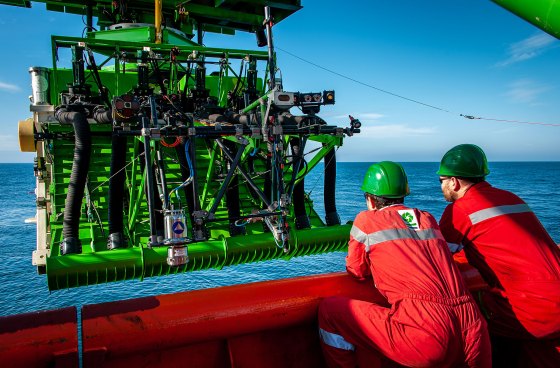
By most assessments, existing mines on land could supply the needed minerals. But after decades of exploitation, the quality of the ore is going down while the energy required to quarry and refine it is going up. Meanwhile, the efforts to extract cobalt, which is mined almost exclusively in the Democratic Republic of Congo, are dogged by persistent accounts of human-rights and environmental abuses. According to deep-ocean-mining proponents, the seabed nodules could provide most of the minerals the world needs, with minimal impact. “The biggest risk to the ocean right now is global warming,” says Kris Van Nijen, managing director of the Belgium-based deep-sea-mining company Global Sea Mineral Resources (GSR). “And the solution can be found on the seafloor, where there is a single deposit that provides the minerals we need for clean-energy infrastructure.” GSR has already trialed a 12-m-long, 25-ton nodule-sucking robot that zigzags across the ocean floor on caterpillar tracks, kind of like a giant underwater Roomba. They dubbed their prototype “Patania,” after the world’s fastest caterpillar.

Commercial mining is not yet permitted in international waters. The International Seabed Authority (ISA), the U.N. body tasked with managing seafloor resources, is still deliberating how, and under what conditions, mining should be allowed to proceed. A few private companies, including GSR and Barron’s Metals Company, have scooped up a couple of dozen metric tons of the nodules on exploratory missions, and are now pressuring the ISA to approve commercial operations. Barron is already telling potential investors that he expects to be harvesting nodules by 2024. GSR says that by the time they are up and running, they will be able to collect up to 3 million tons a year with just two of their mining robots.
Deep sea mining
Courtesy GSRThe deployment of Patania II, GSR’s 25-metric-ton nodule-collecting robot.

Not everyone is on board. Scientists, conservationists, the European Parliament and some national governments are calling for a moratorium on deep-sea mining until its ecological consequences can be better understood. The ocean environment is already under threat from climate change, overfishing, industrial pollution and plastic debris, they argue; added stresses from heavy machinery and habitat destruction could tip it over the edge. Three miles below the ocean’s surface, the deep seafloor boasts some of the most biologically diverse ecosystems on the planet; the perpetual darkness, intense cold and strong pressures foster unique life-forms rarely seen elsewhere, such as a newly discovered ghostly white octopus dubbed “Casper” and an armored snail that researchers believe doesn’t need to eat to survive.

The region may look lifeless, but it is home to thousands of species of tiny invertebrates fundamental to the ocean food web, says deep-ocean marine biologist Diva Amon, whose work is focused on the CCZ. The nodules themselves host microbial life forms that scientists are just starting to investigate—they play an important but poorly understood role in the nodules’ formation that may be vital for a wider comprehension of how ocean processes work. Removing them would be akin to yanking a couple of wires out of the back of your computer just because you don’t know what they’re for. “A lot of the life in the CCZ is very small, but that doesn’t mean it’s unimportant,” says Amon. “Think about our world without insects. It would collapse.”

The little data available suggests that deep-sea mining could have long-term and potentially devastating impacts on marine life. For example, in 1989, scientists simulated deep-sea mining in an area similar to the CCZ, and in those simulations, marine life never recovered, according to a recent study published in the journal Scientific Reports. Plough tracks remain etched on the seafloor 30 years later, while populations of sponges, soft corals and sea anemones have yet to return. If the results of the experiment were extrapolated to the CCZ, the authors concluded, “the impacts of polymetallic-nodule mining there may be greater than expected and could potentially lead to an irreversible loss of some ecosystem functions, especially in directly disturbed areas.”

That said, it’s a hard call, says Amon. “We want to transition to a green economy. But should that mean destroying a potentially huge part of the ocean? I don’t know.”

In June, more than 400 marine scientists and policy experts from 44 countries signed a petition stating that the ISA should not make any decisions about deep-sea mining until scientists have a better understanding of what is at stake and all possible risks are understood. The ISA requires permit holders to undertake three years of environmental-impact assessments before it will grant a commercial license, but given the slow-moving nature of the deep sea, scientists say it would be impossible to understand the impacts in such a short time. Nor is it clear on what grounds, exactly, the ISA will evaluate the results of such studies.

A few days later, the debate grew even more heated as the tiny Pacific island nation of Nauru, the ISA member sponsoring Barron’s company in a mining application, announced it wanted to start mining efforts, triggering the ISA’s “two-year rule,” a clause that allows member states to notify the organization of their intention to start deep-sea mining, even if the regulations governing mining have not yet been formalized.

Deep-sea mining
Courtesy The Metals CompanyA team aboard The Metals Company exploration vessel conducting a survey for species in the CCZ using a remotely operated vehicle.

It also triggered international uproar. “Deep-sea-mining companies are peddling a fantasy of untold profits and minimal risks,” says Louisa Casson of Greenpeace’s Protect the Oceans campaign. “Governments who claim to want to protect the oceans simply cannot allow these reckless companies to rush headlong into a race to the bottom, where little-known ecosystems will be ploughed up for profit and the risks and liabilities will be pushed onto small island nations.” Barron, who has invested millions of dollars in preliminary environmental-impact assessments, describes the abyssal plain where the nodules are located as a “lifeless desert” where the impact of mining is likely to be minimal, if felt at all. “I think we are overthinking this. There is a reason why they are full of battery metals. It’s so we can make batteries,” he says.

If you were to discover a cobalt seam in your backyard, the revenue would, in most cases, belong to you or your government. But much of the world’s known deep-sea metal deposits lies under international waters, which means it belongs to the world.

First discovered in the Arctic Ocean in 1868, polymetallic nodules can be found in almost all oceans, but are concentrated in the CCZ. They were widely regarded as geologic curiosities until the 1960s and ’70s, when several multinational mining consortiums started exploring the potential of the CCZ, with mixed results. Despite an estimated yield of 21 billion tons of nodules, commercial interest in mining the CCZ waned, largely because of high extraction costs and the relative abundance of existing sources of the same metals—particularly nickel—on land. Recognizing that the nodules, along with other potentially lucrative seabed mineral deposits in international waters, should be treated as a “common heritage of mankind,” the U.N. established the ISA in 1994, under the U.N. Convention on the Law of the Sea (UNCLOS). The 168-member-country bureaucracy was tasked with organizing, regulating and controlling all mineral-related activities in the international seabed area “for the benefit of mankind as a whole,” with proceeds shared among those who developed the resources and the rest of the international community.

The treaty gives the ISA two almost mutually exclusive mandates, says Aline Jaeckel, a specialist on international seabed-mining law at Potsdam University’s Institute for Advanced Sustainability Studies (IASS) in Germany: one to administer the mineral resources for the good of mankind, and the other to protect the marine environment from any harm from mining. “They are almost impossible to comply with because any mining will have environmental consequences. There is no way around that. So the question then becomes, How much harm is acceptable?”

Those conflicting mandates may explain why the ISA has yet to issue a single commercial mining permit—and why, in its nearly three decades of existence, it hasn’t even agreed on mining regulations, let alone how revenue from the globally owned resource should be distributed. So far, the ISA has awarded 18 exploration contracts in the CCZ to contractors representing China, Russia and the U.K., along with several other European, Asian and island nation-states. The U.S., which has not yet ratified UNCLOS, tacitly abides by it but has not sought any mining contracts. Once the mining regulations are formally established, exploration-contract holders can apply for commercial-mining permits.


According to the ISA’s mandate, mining revenue from those concessions should be equitably shared among members. Yet industry watchers expect that the organization will establish a royalty fee somewhere from 2% to 6% when it next meets in Kingston, Jamaica. A meeting scheduled to take place in July was postponed indefinitely because of the pandemic. In 2019, a group of 47 ISA members from Africa calculated that the proposed payment regime could lead to a return to member nations of less than $100,000 a year per country, hardly enough to “foster healthy development of the world economy,” as stipulated by the UNCLOS directive to the ISA.

The final amounts could be even less, especially if the ISA establishes more stringent environmental protections, which would require consistent monitoring, an expensive undertaking when it has to happen thousands of miles from port and three miles deep. “The more money put into monitoring, the less gets distributed to the developing states,” says Pradeep Singh, a research associate at IASS in Germany who focuses on seabed-mining issues, and who frequently attends ISA meetings as a consultant for member nations. Apart from a small number of private contractors and supporting states who could potentially receive a windfall, he says, few others would benefit.

Any member nation can sponsor a contract application, but developing nations are given preferential access to concessions with proven deposits, a practice meant to level the playing field. Most sponsoring countries work with their own government-run mining contractors. Nauru partnered with the Metals Company, giving the Canada-based startup preferential access to a 75,000-sq-km area rich in nodules. The details of the Metals Company’s agreement with the government of Nauru are not public, but according to the company’s regulatory filing with the SEC in advance of its pending public listing, the startup estimates that it will earn $95 billion over 23 years of production, of which it will pay 7.6% in royalties to Nauru and the ISA. The rest, presumably, goes to the investors that Barron is now courting.

Singh suspects that Nauru’s recent triggering of the two-year countdown to mining activity was directly linked to the Metals Company’s desire to create investor hype ahead of the listing. Either way, Barron has managed to crown what is at its core an expensive, untested and risky underwater-mining operation with a green halo, promising a surefire—and lucrative, at least for investors—shortcut for saving the planet.

A self-styled maverick with the requisite long hair, beard and leather jacket, Barron professes to be shocked that conservation groups have not wholeheartedly embraced his plan to mine the ocean for the battery metals that will help replace fossil fuels. The alternative, he says, is to keep plundering terrestrial mines with all their devastating environmental and social consequences: biodiversity loss, habitat destruction, contaminated waterways, displaced Indigenous groups and labor exploitation. “If we started mining over again, knowing what we know now, surely we would carry out extractive industries in parts of the planet where there was least life,” he tells TIME via video call. “We wouldn’t go to the rain forest. We would go to the deserts. That’s what we have here in the CCZ: the most desert-like place on the planet. It just happens to be covered by 4,000 m of water.”
Deep sea mining
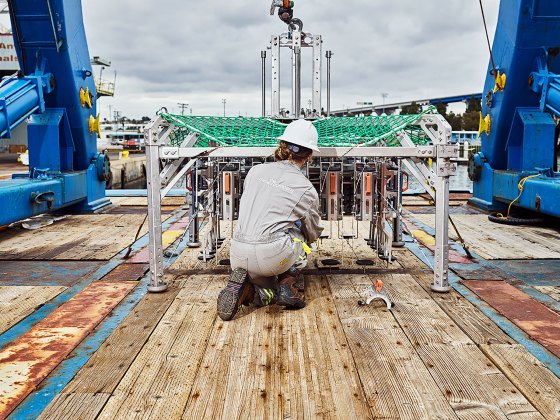
Spencer Lowell for TIMEA Metals Company core-sample collector shown at a harbor in San Diego on June 8, after returning from a deep-sea-mining mission.
Deep-sea mining
Spencer Lowell for TIMECore samples from a deep-sea-mining mission.

Even if seabed mining were able to provide metals in sufficient quantities to feed growing demand for electric vehicles, it’s unlikely that terrestrial mining would come to an end. If anything, demand for the metals would increase, as manufacturers engineer based on the availability of more plentiful supplies. Nor would ocean mining necessarily be immune from the oversight problems that plague land extraction. Fishing on the high seas, for example, is highly regulated on paper, but enforcement is weak because of the difficulty and high costs of policing nearly 100 million square nautical miles of open ocean, leading to rampant abuse.

Nor is it certain that cobalt mining will even be all that important in car-battery technology going forward. To start, there are efforts among many battery manufacturers, Tesla among them, to recycle cobalt (among other elements) from spent batteries. More long-term, manufacturers have already started the shift to alternatives. Lithium-iron-phosphate options—which are jokingly referred to as rust-and-fertilizer batteries in the industry for the everyday ubiquity of their core ingredients—may have a lower energy density than cobalt versions, but engineers are willing to work around those limitations in order to reduce their dependence on imports, says Gavin Harper, a battery metals Ph.D. and research fellow at Birmingham University’s Energy Institute. “They won’t give you the extreme performance [of cobalt battery formulations], but they will give you a more than adequate performance that will meet a lot of people’s needs, without the baggage that comes with [cobalt] chemistries.” Many Chinese EV manufacturers have already made the switch, and Tesla announced in September 2020 that the batteries in its Model S will soon be cobalt-free. Even the IEA in its report noted that EV-battery manufacturers are shifting away from cobalt-rich chemistries in favor of those using cheaper, more readily available materials. “My concern is that we start mining the ocean for cobalt because it is profitable now, but once we move to next-gen batteries and more efficient recycling, we will have done irreversible damage for just a few years of profit,” says Harper.

The polymetallic nodules do contain other valuable minerals, such as nickel and trace amounts of rare earth, that could make mining them worthwhile, says Frances Wall, the principal investigator for the U.K.’s Research and Innovation Interdisciplinary Circular Economy Centre for Technology Metals. But if the nodules aren’t needed for power storage, “it just takes away that magic headline that you are mining the ocean for batteries. And without that, companies might find it harder to raise investment.” Without its green halo, the Metals Company becomes just another mining company hawking unproven riches at considerable risk.

Nor is mining in the deep sea exclusively about minerals. It’s also about access and market share. China, which holds three exploration permits in the CCZ (Russia and the U.K. each have two; every other nation that has any has one), invested early in developing deep-sea-mining machinery and is considered to be a world leader in submersible technology. After a tour of a Chinese submersible-mining-tech factory in 2017, Singh, the deep-sea-mining law expert from IASS, was convinced that the country would be the first to dive in. Instead, it seems to be holding back, he says, because leaders there appear unconvinced that nodule mining is commercially viable. As the world’s top manufacturer of solar panels, turbine parts, EV batteries and all manner of electronics, China is also unsurprisingly the world’s top importer of cobalt, buying some 95,000 metric tons annually, mainly from Congo. As long as supplies remain stable, China will have less interest in aggressively exploring seabed mining. Unless, of course, opening up a new seabed source threatens its dominance in the cobalt-refining business. “If someone is going to be at the front of the line with a cobalt supply that could compete, or threaten their position, then China is going to come quickly, and maybe even cut the line,” says Singh.

Meanwhile, China has focused investment on mining in the technologically challenging—and highly controversial—hydrothermal vent deposits of the deep sea, where it holds two additional exploration permits with the ISA. “China wants to do the stuff that nobody else has got access to yet,” says Jessica Aldred, editor of the Oceans special project at China Dialogue Trust, an independent nonprofit organization promoting environmental awareness in China.

Amon, the deep-sea marine biologist, has been going to the CCZ since 2013. Each time she returns from a research expedition, it is with a deeper understanding of the complex interactions between the creatures that live at inhospitable depths and the environment that supports them. Her research has shown that those relationships affect neighboring ecosystems as well, impacting biodiversity, feeding patterns and carbon sequestration in ways that scientists have yet to grasp. It has also shown her how much more there is to learn. Barron speaks of “plucking” nodules off the seafloor, but the mining robots work more like vacuums, sucking the nodules up along with a layer of sediment approximately 4 in. deep. Amon describes it as not just clear-cutting a forest but digging up the top 10 ft. of soil as well. She also worries that plumes of disturbed sediment could drift with ocean currents, smothering habitats miles away with unknown consequences.
Deep sea mining
Spencer Lowell for TIMEA polymetallic nodule, an amalgamation of nickel, cobalt, manganese and other rare earth metals, formed through a complex biochemical process.

Barron, who has already spent $3 million and committed a further $72 million to deep-sea research, says that preliminary findings show no such impacts. Amon argues that there hasn’t been enough time to know for sure. “No one is saying never,” she says about mining in the deep sea. “Just not yet. By rushing in, we risk losing parts of the planet and species before we know them, and not just before we know them but before we understand them and before we value them.”

Companies are starting to heed scientists’ call for a moratorium on exploration activities. In March, BMW and Volvo joined other businesses in a joint statement to say that they would not buy any metals produced from deep-sea mining before the environmental risks are “comprehensively understood.” Even the World Bank warned of the risk of “irreversible damage to the environment and harm to the public” from seabed mining, and urged caution. The mining companies argue that the ISA’s existing research requirements are sufficient. “No commercial licences will be granted by the ISA without a full environmental-impact assessment. If the science shows the deep seabed has no advantages over the alternatives, there will be no seabed-minerals industry,” says Van Nijen, of GSR. He points out that putting a stop to exploration could even be counterproductive. Both GSR and the Metals Company have already invested tens of millions in deep-seabed research. “A moratorium would put a halt to all that,” says Van Nijen. “[Stopping] exploration takes whatever certainty there is for the industry away, which means investment will disappear, which means that research isn’t funded, which means in 10 years’ time, we are in a similar boat as we are today, without a significant advance in knowledge.”

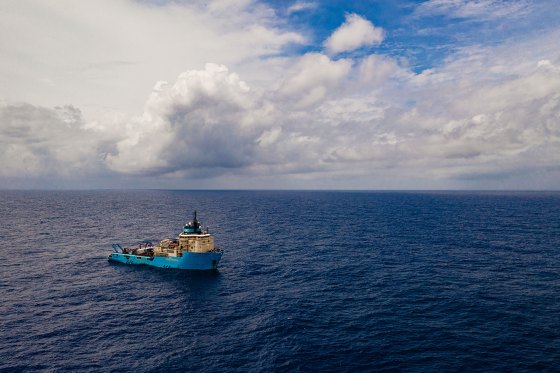
Barron may dismiss the bottom of the CCZ as a barren wasteland, but his scientists think differently. When the Maersk Launcher pulled into San Diego’s port on June 8, after a six-week research expedition to the CCZ sponsored by the Metals Company, the top deck was bustling with 21 marine scientists from eight universities packing up seafloor samples to take back to their labs for further analysis. Lead scientist Claire Dalgleish, a marine biologist working with the Seattle-based marine-consulting service Gravity Marine, peered into a box containing a 20-sq.-in. section of nodule-studded sediment that had been stamped out of the seabed with the underwater equivalent of a giant cookie cutter. Pointing with her finger, she identified several species of sea life all but invisible to the naked eye: bryozoans, algae, xenophyophores, miniscule sponges and a delicate fanlike creature called a chiton. “Initially you might look at this and think there’s nothing there,” Dalgleish says, “but there’s actually a fair amount of life. It’s just a really small scale.”
deep sea mining
Courtesy The Metals CompanyThe Metals Company’s exploratory vessel, the Maersk Launcher, conducting environmental studies in the CCZ.

None of the scientists on board are ready to say what kind of impact, if any, mining will have. An assessment like that will take years of research, says principal investigator Andrew Sweetman, a marine scientist at Edinburgh’s Heriot-Watt University. This is his eighth trip to the CCZ in the past decade, and on each expedition he has discovered something new: “It’s kind of like being the only person on a planet for the first time. It comes with an enormous amount of responsibility to work out exactly what’s going on. But that’s why we’re out here.” Sweetman doesn’t want to get sucked into the controversies over deep-sea mining, but he does agree that without mining interest, research like his wouldn’t be happening much at all. “With all the investment that the mining companies are putting into the Clarion-Clipperton Zone, it’s probably going to be one of the most well-studied areas on the planet by the time we’re finished,” he says.

Whether or not that research will open the deep sea to mining, he doesn’t know. What he does know is that in the drive to save the planet from human-induced global warming, there will have to be trade-offs. “I’m not for mining, and I’m not against it. We all have to look in the mirror and realize that in order to get electric cars or a new cell phone or a new computer, tons and tons of rock will have to be extracted from either the ocean or the land,” he says. “All I’m trying to do is get the best environmental data so that if mining does go ahead, we know with a good level of confidence what’s potentially going to be damaged, and what the effects are going to be. And then it’s up to society to make the decision to go ahead.”

—With reporting by Charlie Campbell/Beijing and Corinne Purtill/San Diego

viernes, 3 de septiembre de 2021

New story in Science and Health from Time: Hurricane Ida Raises the Question: How Can Cities Keep Subways Safe in an Era of Climate Crisis Flooding? Hurricane Ida Raises the Question: How Can Cities Keep Subways Safe in an Era of Climate Crisis Flooding?


As the remnants of Hurricane Ida passed over the northeast Wednesday night, dumping a record-shattering 3.15 inches of rain on New York City in a single hour, water began to pour into the city’s subways.

The system flooded in 46 locations and the MTA cut service across all lines overnight. Rescue operations had to be carried out to reach those unlucky enough to be caught in at least 15 subway cars stranded by flood waters and hundreds more people were rescued by police from stations. No one was injured, the MTA said.

The worst of the storm, which prompted city authorities to issue New York’s first ever flash flood emergency, has passed. But the events of summer 2021 have forced commuters all over the world to reckon with the vulnerability of their underground train systems as the climate crisis makes heavy rains and storm surges more common. Back in July, pedestrians in New York and London shared videos of station entrances almost entirely submerged. Later that same month in the eastern Chinese city of Zhengzhou, subway flooding reached a nightmarish worst-case scenario: hundreds of riders were trapped in cars as waters rose around them. Fourteen people drowned.
[time-brightcove not-tgx=”true”]

Public transit agencies from New York to Tokyo have undertaken massive and expensive projects in recent years to make their systems more waterproof, says Singdha Garg, head of adaptation research and performance at C40, a coalition of cities focused on the climate crisis. “But with the size of these systems, the age, the cost—no city in the world is completely there: we will keep seeing cases of flooding.”


Tributes to victims of subway floods in Zhengzhou, China
Cai Xingzhuo–JIEMIAN NEWS/VCG/ Getty ImagesFlowers at the entrance of Shakoulu subway station to mourn those who died after getting trapped in a flooded subway on July 28, 2021 in Zhengzhou, Henan Province of China.

Safety is “in the DNA” of public transit agencies, according to Corentin Wauters, a rail expert at the International Association of Public Transport, and as the threat of extreme weather has grown in recent years, most major systems have developed plans to keep riders safe.

“In Paris, for example, where the last really major flood occurred more than a century ago, [the local transit agency] has a very well-established emergency plan,” Wauters says. The agency has developed a large stockpile of sandbags, aluminum barriers and concrete blocks to protect the metro, which opened in 1900, and carries out regular drills for transit workers and other city government departments to work together to deploy them.

Newer systems have climate protection embedded in their design, Wauters says. In Bangkok’s subway, which opened in 2004, stations in low-lying areas are raised around four feet aboveground with steps to enter, and have heavy, flood-proof doors. When a strong monsoon caused widespread flooding across Thailand, Wauters say, the subway maintained uninterrupted service.

Adapting older systems to the climate-crisis-era is complicated, though. Despite recent images of waterfalls gushing over platforms, and rider frustration over service failures, public-transit experts actually point to New York as a global leader in flood resilience. Since 2012’s Hurricane Sandy, which flooded nine subway tunnels and let millions of gallons of equipment-damaging salt water into the network, the MTA has spent $5 billion on repairs and updates.

A colossal amount of work was needed. New York’s subway, which opened in 1904, was not designed to deal with the level of rainfall or coastal flooding that the city is now experiencing and can expect in future, says Janno Lieber, acting head of the MTA, speaking to TIME in August, before Ida struck. “Our system was built mostly through what you call ‘cut and cover’—where people basically dug big ditches and created subways that are only five or 10 feet underground,” he says. “We have a lot of vulnerability to surface water conditions. So, we’re attacking all of the points of vulnerability and where water can get in.”

The N.Y. MTA has revamped 11 under-river tunnels that were particularly vulnerable to coastal flooding. That included simple interventions, like moving essential cables and equipment up high on racks inside tunnels, as well as massively expanding the pumping system which clears water out of the train network. (Even on a dry day, the system pumps 13 million gallons of water out.) Water-tight doors that can be closed during storms have been placed at tunnel entrances and similar systems are being rolled out at vulnerable station entrances and stairways. Some 3,000 vents have been covered, either permanently or with temporary covers. The MTA has also spent almost $1 billion to protect train yards—often particularly vulnerable due to their positions at the end of lines near the coast—by adding new flood barriers and drainage systems.

But, though Lieber expects all those safeguards to keep seawater out of the subways during a Sandy-style storm surge, they weren’t enough to prevent rainwater disrupting services and stranding passengers this week. Flash floods, caused by sudden heavy rainfall, are expected to become more frequent as the climate warms and—as events in Zhengzhou’s subways showed—they can have deadly consequences for the public.

Lieber says that New Yorkers shouldn’t fear the fatal consequences of flooding that took place in Zhengzhou. Chinese state media reported that there was an unusual delay in suspending subway service, and that the metro company’s centralized power structure may have played a role. “The operators did not have the authorization, because of the way their system works, to actually stop and not proceed based on [the water levels] they were seeing. Our operators do have that authority, number one. Number two is we have an operating principle that when water reaches a certain level above, more or less the top of the rail, you don’t proceed any further. So, our passengers, I believe, needn’t be concerned that anybody will be driving into a condition like what happened in China.”

Yet a fragile subway system has the potential to impede passengers in other ways. It is an equity issue, since people who are reliant on subways in U.S. cities are disproportionately Black and Latino communities and people on low incomes. If subways increasingly must be closed for long periods for safety reasons, transit-reliant riders will have difficulty getting to and from work—which is especially a problem for low-income individuals who are more likely to have jobs that cannot be done from home.

Making subways and other public transit modes more resilient to extreme weather will require a city-wide approach to flood engineering, Garg says. “Transit agencies can only do so much if drainage and water absorption across the city aren’t there.”

In New York, the large areas covered by asphalt and the scarcity of green space make the city particularly vulnerable to large volumes of surface runoff during storms. Some of the flooding in subway stations this summer can be traced to the sewers that were overwhelmed. Improving coordination between the city government—which controls the sewers and streets—and the state government—which controls the MTA—could be key to managing future storms. Successive state governors and city mayors have struggled to do that, though there may be an opening to improve relations as new faces take over both roles this year Lieber, who began his role last month, says he intends to begin joint work with the city government to “identify vulnerabilities in high ground areas which are away from the coastal flood zones.”

When it comes to reducing the pressure on subways systems during storms, New York could stand to learn from other parts of the world more used to dealing with floods. Rotterdam, in the famously low-lying Netherlands, has invested heavily in nature-based solutions to become what urban design specialists call a “sponge city.” Since 2008, the city has added more than 250,000 square meters of water-absorbing green roofs to its buildings, expanded parks, and planted vegetation along tramlines. Tokyo, which straddles five river systems, spent decades and billions of dollars developing a cavernous drainage system. Completed in 2006, it is designed to protect the city from many kinds of flood events, including tsunamis and dam bursts.

These kinds of projects are expensive, and intergovernmental collaboration, at least in New York, has historically proven complicated. But climate advocates hope the increase in disruption and devastation from floods will force more action on adapting public transit. “We’ve got to learn to live with the water,” Garg says. “Because the water will come.”

jueves, 2 de septiembre de 2021

New story in Science and Health from Time: Nursing Home COVID-19 Vaccine Mandates Protect The Most Vulnerable, But Pose a Hidden Threat to Residents Nursing Home COVID-19 Vaccine Mandates Protect The Most Vulnerable, But Pose a Hidden Threat to Residents


Some two weeks before U.S. President Joe Biden announced on Aug. 18 that nursing homes must require their staff to get vaccinated or risk losing their Medicare and Medicaid funding, Genesis HealthCare, which manages about 250 facilities nationwide that offer long-term care and other services, had said its workers would need to be vaccinated. “The growing spread of the Delta variant makes clear that we need to increase our vaccination rates substantially to better protect our patients, residents and employees,” read an Aug. 2 memo to employees, noting that 65% of staffers were vaccinated at that point; employees had until Aug. 23 to get their shots.
[time-brightcove not-tgx=”true”]

In the memo, Dr. Richard Feifer, the company’s chief medical officer, said that while voluntary vaccination of staff was appropriate after the vaccines were first made available, “the pandemic is different now.”

With the U.S. in the grips of a fourth wave of COVID-19 fueled by the more transmissible Delta variant, many nursing home companies and other health care providers have, like Genesis, announced that staffers must either get vaccinated or agree to regular testing, or be fired or removed from schedules. Biden’s announcement means that other nursing homes will likely follow suit, as the rule is “effectively a mandate” given the industry’s dependence on Medicaid and Medicare funding, says Dr. David Grabowski, a professor of health care policy at Harvard Medical School.

What’s less clear, however, is how many staffers will actually choose vaccination over quitting their jobs. Many will have to make this decision: nine months into the U.S. inoculation campaign, about 39% of U.S. nursing home staffers remain unvaccinated, according to the U.S. Centers for Disease Control and Prevention. In interviews with TIME, unvaccinated nursing home workers offered a litany of reasons for their decision, including health concerns and skepticism regarding how quickly the vaccines were made available. Many also shared a sense that their employers have not done enough to keep them physically and mentally safe, and requiring vaccination is a step too far. For some, it’s reason enough to quit. If enough leave, it could exacerbate the industry’s pandemic-era staffing crisis—94% of nursing homes reported a staffing shortage over the last month, according to a American Health Care Association and the National Center for Assisted Living survey of 616 nursing facilities released June 23, and low staffing levels are tied to worse health outcomes and quality of life for residents.

Among those leaving is Ashley Lanctot, a 25-year-old licensed nursing assistant (LNA) at the Genesis-operated Wolfeboro Bay Center in Wolfeboro, N.H. She and other current and former Wolfeboro Bay employees told TIME that the facility has been frequently understaffed, making it impossible to give residents adequate care. At times, Lanctot says, two LNAs would be assigned to 40 patients. If such staffing levels were maintained for an entire 24-hour day, LNAs would only have about 1.2 hours per patient; in a 2013 report prepared for the U.S. Centers for Medicare and Medicaid (CMS), on average, the lowest-rated facilities offered about 2.36 hours of aides’ time per resident a day, while the highest rated facilities offered 2.55. (In a statement, a spokesperson for Genesis said, “while staffing is certainly a challenge throughout the industry, Wolfeboro Bay Center’s ‘Hours per Patient Day’ are well above the state average.”)

Wolfeboro Bay employees say they were forced to cut corners; patients had to go without proper bathing or opportunities to socialize, and would sometimes be left to languish in bed. “You couldn’t give showers,” says Lanctot. “You couldn’t get totally dependent people out of bed using the mechanical lift…I ended up becoming very depressed, knowing that I felt like I was neglecting these people.” Other workers say the facility continued to take in new patients even as the staff struggled to care for those already admitted. “That’s not fair to the person coming in,” says Joeline Barg, a registered nurse still working at Wolfeboro Bay. “And that is not fair to the people living there. Because it takes away from both sides.” Feifer says it is a general rule at Genesis facilities to only admit patients “when they are assured to have the necessary and adequate staffing to care for them.” A spokesperson said that admissions at the Center were put on hold following the vaccine requirement announcement, and that some modifications to residents’ care were necessary to keep patients safe, based on CMS guidelines; this included a restriction on taking residents to shower rooms. That said, the spokesperson noted, these modifications played a role in the fact that no staff members or residents at Wolfeboro Bay have been diagnosed with COVID-19 throughout the course of the pandemic.

Read more: America’s Assisted Living Residents Are Falling Through the Cracks of COVID-19 Response, Families Say

During the pandemic, Lanctot was diagnosed with hypertension from stress, and was put on bed rest for three weeks, she says. While other current and former Genesis employees say they probably would not have gotten vaccinated either way, Lanctot says that, while she has some reservations about the COVID-19 shot, she probably would have gotten vaccinated in order to keep her job if she felt that she was being treated with respect. “If you’re at a place of work, and you feel appreciated and respected, and feel like people care about you and your well being, that initiates someone to want to stay at work,” says Lanctot. “This place did not do that for me.”

The difficult tradeoff

It’s too early to know how many workers will follow Lanctot’s example. So far, only a small number of employees seem to be leaving their jobs; one study published as a pre-proof in the Journal of the American Medical Directors Association in July found that, at one nursing home that implemented a mandate, just 18 of its nearly 250 staff members quit, a churn rate of about 7%.

All this raises the question: is it better for nursing homes to have a small handful of unvaccinated staffers, or to suffer a staffing crisis? Grabowski, for one, says the former is the lesser of two evils. “We’re sort of on the edge right now, in terms of staffing nationally,” he says. Low staffing levels are tied to worse treatment for residents, such as the overprescription of antipsychotic drugs, and increase the risk of injuries. One study published last August found an association between understaffing and COVID-19 cases, and an Associated Press report published in November found that besides COVID-19 deaths, 40,000 more people than usual died in U.S. nursing homes last year, deaths it largely attributed to neglect and isolation.

Yet there’s no denying the deepening viral crisis in the U.S., and nursing home residents, who account for nearly a quarter of total U.S. deaths due to COVID-19 so far, are particularly vulnerable. While the coronavirus vaccines reduce the risk of hospitalization by as much as 94% among people over 65, older people sometimes have a weaker response to vaccination, and emerging data suggest vaccinated people’s immunity wanes over time (hence the current consideration of booster shots). There’s a decent argument, then, that if vaccine mandates cause some unvaccinated nursing home workers to leave, it could be a blessing for residents, who would likely be safer if all of those around them are vaccinated, especially as staff members are a link between long-term care facilities and the surrounding communities. “Understaffing may make the facility dirtier, and it may make the residents wait longer for their meals. Un-vaccination makes them dead.” says Arthur Caplan, a professor of bioethics at New York University School of Medicine.

How to fix nursing homes

If faced with mandate-triggered staff shortages, nursing home operators could theoretically raise wages to attract new workers, as many companies in other industries have done amid the recent labor crunch. However, some say that low Medicare and Medicaid reimbursements—meaning, the payments they receive from the federal government to provide services—make it difficult to raise wages, and the pandemic has taken a major financial toll on nursing home operations. In a June 29 survey from the American Health Care Association and the National Center for Assisted Living, about half of U.S. nursing homes and assisted-living facilities say they’re currently operating at a loss, and only a quarter are confident that they could stay in business for another year or longer. Yet some say higher wages are possible. “It’s primarily not so much a shortage of workers, but a failure to pay them adequately,” says Charlene Harrington, professor emeritus at the UCSF School of Nursing. “It’s a chronic problem, because most nursing homes are for-profit, and they’re trying to make money by keeping the wages and the benefits low.”

A potentially tougher problem to fix may be the culture within nursing homes. Staff members tend to come from vulnerable demographics; nine out of ten are women, a fifth are immigrants, and a majority are people of color. Additionally, nursing homes are often very difficult places to work; experts say that nursing homes tend to be hierarchical, and aides are typically undervalued. In the end, this leads to mistrust of the leadership among employees. Ongoing exploitation leads to a “culture of fear” at many facilities, including fear of reporting bad working conditions, says Jill Harrison, an assistant professor at Brown University School of Public Health.

All the same, some experts doubt that vaccine mandates will lead to nursing home staffing shortages. Harrington says that many nursing home aides who quit, in particular, are likely to seek employment at another nursing facility. And if all or most of the major nursing home chains issue vaccine mandates to keep receiving federal funds, there won’t be many places workers can go that wouldn’t require they get their COVID-19 shots.

It’s not a perfect analogy, given the unique circumstances of the current pandemic, but past research on flu vaccine mandates has found most health care workers chose to be vaccinated rather than quit. For example, a 2013 study published in the American Journal of Infection Control found that less than 1% of staff members sought an exemption or quit after Loyola University mandated all health care workers get vaccinated, and coverage rose from 65% to 99%.

Indeed, some nursing home workers have welcomed mandates as means to protect both themselves and their residents during a particularly harrowing time—as a July 2020 analysis published in the Washington Post showed, nursing home work was one of the most dangerous jobs in the U.S. 2020, with double the fatality rate of famously dangerous jobs like logging, roofing and construction, according to Bureau of Labor Statistics data.

Read more: ‘It’s Getting Worse.’ Nursing Home Workers Confront Risks in Facilities Devastated by Coronavirus

Jenna Szymanski, a licensed practical nurse at the Good Samaritan Society–Luther Manor facility in Sioux Falls, S.D., says her reaction to the vaccine mandate was “hell yes.” To Szymanski, anyone who works at a nursing home facility has a responsibility to get vaccinated. Vaccination also makes her work feel safer, especially because she’s immunocompromised and a diabetic.

“I spend my entire shift protecting [the residents], helping them trying to heal what’s wrong. [Vaccination] just seemed like the next step to complete my duty as a nurse,” said Szymanski. “Nobody forced you into nursing … by taking that position, you are accepting all of the responsibilities, the priorities, everything that comes with it. And this is a new day and age, it’s 2021. This is now what is required.”

New story in Science and Health from Time: Can Hurricane Ida Move Public Opinion on Climate Change? Can Hurricane Ida Move Public Opinion on Climate Change?


A version of this story first appeared in the Climate is Everything newsletter. If you’d like sign up to receive this free once-a-week email, click here.


For many climate reporters, myself included, the arrival of Hurricane Ida brought a recognizable pit to the stomach. The details of the stories emerging as the storm barreled toward the Gulf Coast were new—of course—but they all had a familiar ring to them from the storms I’ve covered in the past decade. Ida offered an example of how climate change is making hurricanes stronger. The storm demonstrated the bigger trend of extreme weather harming the poorest the most. And the hurricane—like so many Gulf Coast storms before it—threatened the oil and gas infrastructure that powers much of the rest of the country.
[time-brightcove not-tgx=”true”]

Welcome to climate change. The details—the storm surge, the wind speed, the death count—are going to vary. But as the effects of warming become increasingly obvious, we’re going to see more events with the same recognizable features.

The growing frequency of big storms, wildfires and floods marks a notable shift for those who have been looking to explain what a warmer planet will look like. Throughout my time reporting on this beat, I’ve heard the argument over and over that the increase in climate change-linked extreme weather events would drive new recognition of global warming and help alter the political atmosphere. That could still happen. But now that those events are here, it also seems plausible that each one may become just another storm or wildfire in the eyes of the public, a second-tier story in the constant barrage of other news. The challenge for anyone who communicates about climate change to the public—journalists, scientists, activists and elected officials—is to find ways to use each weather event as an opportunity to grow public understanding rather than contribute to a collective tuning out.

This requires thinking differently. For me, and probably many of you reading this newsletter, big extreme weather events prompt almost immediate consideration of what role climate change might have played. I look at the numbers coming from NOAA and take note when researchers say they will be conducting a rapid attribution analysis to see if indeed climate change contributed.

But researchers who study public perception of climate change say climate change barely registers during an extreme weather event for the average American. Most people are likely to view a big storm as just another in a long string of them. In fact, the historical record over the past few decades shows little shift in national public opinion on climate change driven by the increased frequency of hurricanes, droughts and wildfires that we might have expected to turn the tide. “The fact that these events are happening is not a smoking gun for Americans,” says Jon Krosnick, a social psychologist at Stanford University who studies public opinion on climate change. “Hurricane Katrina had no measurable impact on public opinion on climate at all. Hurricane Sandy had no measurable impact on public opinion on climate at all. Unusually cold winters in the East Coast had no impact.”

This may be disheartening, and raises the question of how communicators on climate can connect the dots in a way that will advance the public discussion.

Many argue that repetition will do the trick even though it hasn’t moved the needle yet. While media outlets have done a better job connecting extreme weather events to climate change in recent years, it’s a relatively new phenomenon. And, the thinking goes, it will take years of hearing the same message repeatedly before everyday people begin to connect the dots on their own. “We need to repeat, repeat until we’re so sick of hearing the same words come out of our mouth,” says Anthony Leiserowitz, who runs Yale University’s Program on Climate Change Communication. “And yet that may be the very first time somebody’s ever hearing it.”

Others say the only way to advance public understanding is to focus on solutions while others still say communicators need to localize the problem, talking about the impacts on the ground in each individual community. Can the circle be squared? One approach is for climate communicators to continue repeating the key role climate change plays in worsening extreme weather while finding new angles to inform the public about the breadth and depth of how climate change is reshaping our society incorporating both problems and solutions. Ultimately, more people talking honestly about climate can only help.

New story in Science and Health from Time: U.S. Civil Engineers Bent the Rules to Give New Orleans Extra Protection from Hurricanes. Those Adjustments Might Have Saved the City During Ida U.S. Civil Engineers Bent the Rules to Give New Orleans Extra Protection from Hurricanes. Those Adjustments Might Have Saved the City During Ida


In the aftermath of Hurricane Katrina, which hit New Orleans in late August 2005, the U.S. Army Corps of Engineers was tasked with building a new flood-defense network. Congress allocated billions of dollars to build pumps, dikes and floodwalls for a system meant to withstand a so-called “100-year storm.”

That’s typical. In building flood protection, engineers can’t guarantee their designs can survive every possible weather event. Instead, they often build to a standard based on the 100-year storm, an extreme weather event with a 1% probability of occurring in any given year, calculated statistically from past floods and rains in a given area. That standard works fine when you’re building a dike in areas where a flood won’t cause enormous damage, like an area of farmland. But in New Orleans the metric is woefully inadequate to defend the city from another disaster, partially because the usefulness of past weather data in predicting what the future will hold is plummeting.
[time-brightcove not-tgx=”true”]

But according to a former senior official in the Army Corps who worked on the project, the engineers designing new flood barriers in New Orleans stretched their calculations such that they would lead to the construction of better protection than a strictly by-the-book approach might have entailed. Those decisions may well have saved New Orleans from calamity this past week, when Hurricane Ida hit.

Don Resio, then a technical supervisor in the U.S. Army Corps of Engineers’ (USACE) coastal program, was assigned in 2006 to lead a group of specialists tasked with using statistics to model the likely threat that future storms would pose to New Orleans. He toured the city’s devastated defenses in the days after Hurricane Katrina, and today remembers the sight of children’s toys floating in the rancid floodwaters, along with the stench of rotting bodies emanating from waterlogged houses. He knew that legislators in charge of allocating funding for the project likely didn’t understand that building for a 100-year storm, the standard in many such projects, would leave populations at significant risk. For instance, there would be a cumulative 26% probability of a 100-year storm hitting sometime in the next 30 years. Across 65 years, it would be equivalent to the flip of a coin. And as climate change brought stronger and more frequent extreme storms, the likelihood of such events would only increase.

So the engineers tasked with designing and building the city’s new defenses fudged the numbers so that their work would actually protect New Orleans from the inevitable. After all, no one knew when Congress would get around to funding New Orleans protective measures again, and Corps engineers had a unique opportunity to win the resources needed to do their job properly.

The engineers didn’t lie; instead, they just were exceedingly “conservative” in all their approximations, says Resio. Certain variables were factored in twice. Those accounting for potential ocean waves, for example, were added in twice, meaning that the resulting levee was built with an extra few feet of clearance. If they had gone with a strictly “rule-based” 100-year flood system, it would not have accounted for the likelihood of climate change, says Resio. But instead, the engineers designed and built a system—which included the $1.1 billion West Closure Complex and the 1.8-mille long Lake Borgne Surge Barrier—that might be considered more like 200-year flood protection, Resio says.

“It was all done legitimately, rule-based, but it was done with a very conservative eye to uncertainty,” says Resio. “We knew we were going above the limits that somebody might have thought we should…We were making the decisions so it wouldn’t come back to haunt us.”

As the head of a nationally organized Army Corps specialist group in charge of post-Katrina risk statistics for New Orleans, Resio reviewed levee height estimates and other numbers coming out of other working groups and the local USACE district in the post-Katrina effort. “We were going to go for everything we could to protect the city, and it passed muster with everybody up the way. Nobody asked any silly questions,” says Resio. “The [local] district [USACE] people had come up with their numbers, and I knew they were higher than what were legitimate. I never asked them how they got their numbers. I knew they were higher then, and they knew they were higher then, but as long as you’re not openly saying it—I don’t think anybody said, ‘Hey let’s absolutely violate [the 100-year metric].’ Though maybe we did.”

Read more: How to Help People Impacted by Hurricane Ida

Hugh Roberts, the COO of The Water Institute of the Gulf, a non-profit research organization, worked with the Army Corps on post-Katrina flood protections. He characterizes the Army Corps’ work simply as solid engineering judgement that effectively accounted for future climate uncertainty. “There might have been some double counting, and there might have been some raising some numbers, because maybe there was enough funding to do that,” says Hugh. The reality, he says, is that 100-year flood levels of today are going to look far different 20 or 30 years from now, and engineers must factor in that likelihood.

Those measures were tested this past week, as Hurricane Ida pummeled the city. The defenses built in the post-Katrina years held, preventing the kind of devastating flooding that killed nearly 2,000 people in New Orleans in 2005. According to Resio, if they had designed the system strictly for a 100-year storm, it would have failed during Ida. The extra layers of protection added by the engineers might well have saved countless lives.


In areas, like New Orleans, that expect to see more frequent and extreme storms in the decades ahead, infrastructure designed to keep a population safe can depreciate rapidly, failing to keep up with what a warming climate may throw at it, explains Jeremy Brinker, a professor of civil and environmental engineering at the University of Michigan. “With climate change and sea level rise, that [flood] water level that under historical statistics had a one-in-100 chance of occurring each year is going to gradually have a higher and higher chance of occurring,” he says. In other words, extreme weather events that can overpower infrastructure built to 100-year standards are becoming more and more common.

Such problems aren’t limited to New Orleans. Since 1950, storms that overmatch design specifications for infrastructure like dikes and dams have become increasingly common around the country, according to a 2019 study published in the journal Geophysical Research Letters. In essence, “100-year storms” have been coming more often than they should.

Read more: What Hurricane Ida Means for Louisiana’s COVID-19 Problem

One strategy in an infrastructure arms race against nature might be for cities to invest in so-called adaptive design, where they build infrastructure with the expectation that they may have to add to it later. For instance, a city could build extra-wide levees, allowing room at the top (and support underneath) to add additional height in anticipation of higher sea levels in decades ahead. Near Amsterdam, for example, engineers have built extra culverts into some of the dikes meant to protect the city from storm surges, planning for a future where extra pump stations would need them to face a rising ocean. Indeed, the Netherlands is seen as a leader when it comes to managing water in a changing climate—some infrastructure in the country has been designed to anticipate weather events expected once every 10,000 years.

But there’s a problem of expense in simply building bigger and bigger levees, slucegates, and other flood control structures. Joannes Westerink, a civil engineer and computational hydrologist at Notre Dame University, has spent much of his career developing software to predict hurricane storm surges. He says that it’s feasible to protect smaller, densely populated areas from the most extreme floods, but that the problem grows increasingly difficult and expensive as the physical area you’re trying to keep dry grows. In the long term, there’s a choice: Encourage people to live closer together—and reduce highways, lawns and golf courses—and you might be able to reasonably protect them from the worst a changing climate can throw at them. Or, make do with weaker flood-protection systems to cover a larger area and protect a much more widely spaced population.

Going into a future that will see more extreme storms and sea level rise, New Orleans appears to be on the latter path. More than 350 miles of levees protect the city from the waters that surround it. “That’s a heck of a lot,” says Westerink. “Can you [protect to a higher standard] in a footprint that might only be 100 miles? You bet. But you have to totally rethink infrastructure, how people live.”

And even with the formidable extra layers of protection engineers baked into New Orleans’s system, Resio still worries that the levee design he worked on will become inadequate to protect the city as seas rise and storms worsen. Currently, he expects the system can withstand waves and storm surges from a category 4 hurricane. “[There’s] also probably some conservativeness on top of that,” he says. “But that doesn’t mean it won’t be overtopped, and that still scares me.”